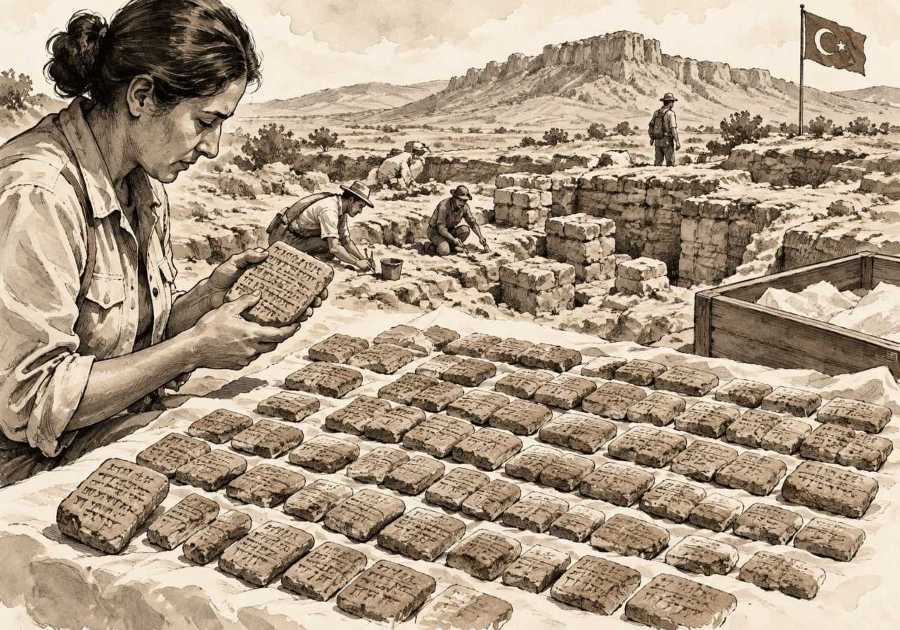
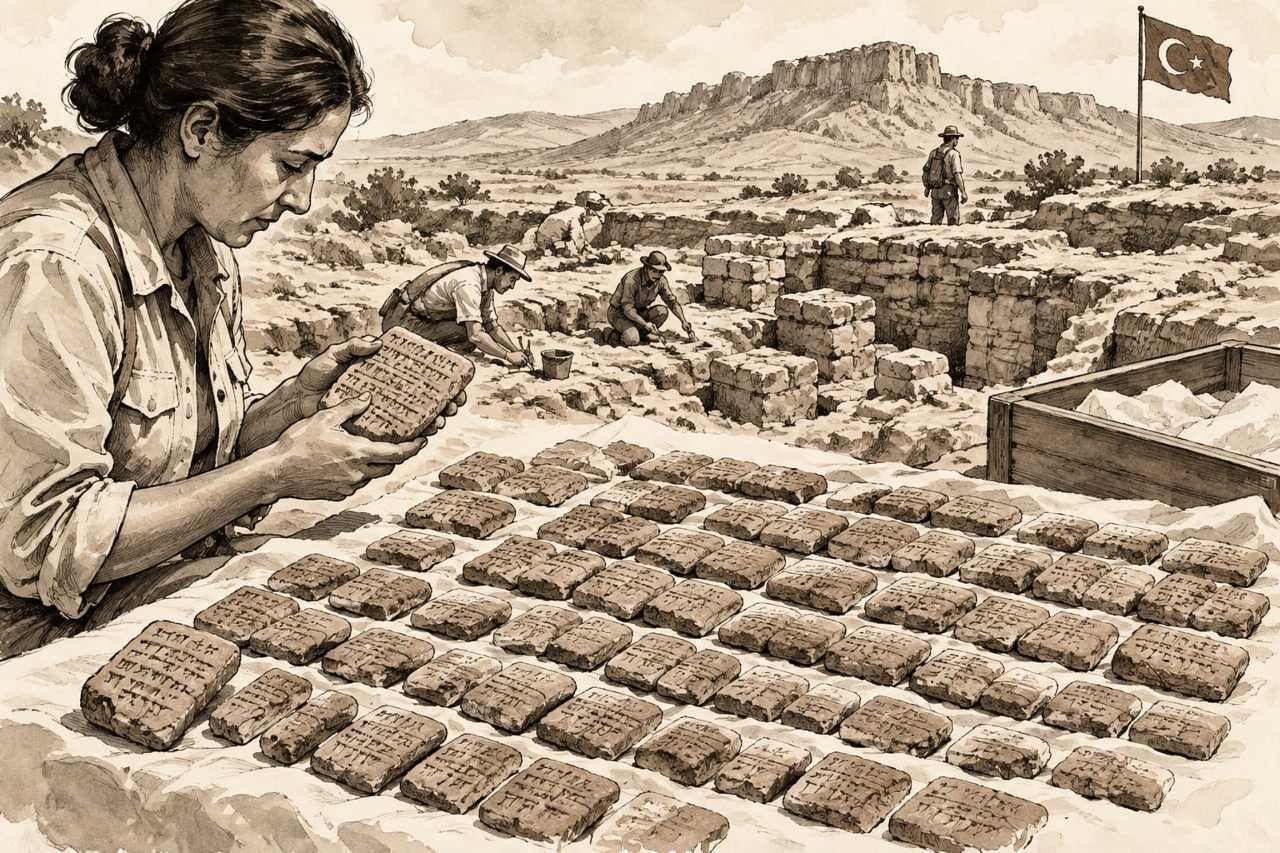
Turkey's Ministry of Culture and Tourism announced on October 8 that excavators at Kayalıpınar, in central Turkey's Sivas Province, uncovered 131 Late Bronze Age cuneiform tablets during the 2026 digging season. The ministry is calling the find, combined with 53 tablets recovered the previous year, the most comprehensive Hittite archive discovered in the 21st century.
I have sat through enough "most significant discovery" press releases from this corner of archaeology to know the phrase does a lot of lifting. So let's look at what the ministry actually said, rather than what the headline wants you to feel.
What's actually new
The concrete figure here is 184 tablets, 131 from this season's work at Kayalıpınar and 53 from 2025, now being treated as a combined archive. These are cuneiform texts, the wedge-shaped script the Hittites and their neighbors used across the Late Bronze Age, and the site itself, Kayalıpınar, has been a working excavation for some time rather than a brand new find on the map. What changed is the volume pulled from the ground in two consecutive seasons and the ministry's decision to present them together as a single body of material rather than as separate, smaller hauls.
The qualifier doing the real work in that press statement is "21st century." That is a specific and fairly narrow claim. It is not "most significant Hittite archive ever found" or "largest cache discovered." It is a claim about recency, and recency claims are easy to be true and still not mean very much, because archive-worthy Hittite finds simply have not been common in the last 25 years. Compare that against the broader record: more than 30,000 Hittite tablets and tablet fragments have been excavated over roughly two centuries of digging in the region, mostly concentrated in massive finds from sites like Hattusa decades ago. Against a corpus that size, 184 new pieces is a real contribution and a genuinely useful one for specialists, but it is not reshaping the scale of what is known about the Hittites. It is a meaningful addition to a shelf that is already very full.
None of that is a knock on the find. Cuneiform tablets are slow, painstaking things to excavate intact, and getting 184 of them out of one site across two seasons is good fieldwork. I just don't think the "most comprehensive archive of the century" framing needs to be accepted at face value, because it is a low bar dressed up as a high one.
What we don't know yet
The ministry's statement, as reported, does not say what the tablets contain. We don't know if these are administrative records, royal correspondence, religious or ritual texts, treaties, or some mix of all of it. That distinction matters enormously for how significant the find actually is. A cache of 184 administrative receipts is a very different thing from 184 tablets that include a previously unknown treaty or royal decree.
We also don't have any word yet on dating precision beyond the general Late Bronze Age label, on the condition of the tablets, on whether they are complete or fragmentary, or on when translation and publication might happen. There is no mention of who is leading the dig team, what language or languages the tablets are in beyond the general Hittite cuneiform tradition, or whether excavation at Kayalıpınar will continue into further seasons. Those are the details that will actually tell us whether this changes anything about Hittite history, and right now they are simply not in the announcement.
Who should care
If you follow Hittite studies, Anatolian archaeology, or the broader Late Bronze Age Near East, this is worth filing away and watching for the translation publications that will eventually follow. Scholars working on Hittite administration or religion in particular should keep an eye on what the tablets actually say once they are read.
If you were expecting a discovery that rewrites Hittite history or dramatically expands what's known about the period, there isn't one here yet. This is solid, incremental fieldwork dressed in a press release that oversells its own modifier. Wait for the content of the tablets before deciding how big a deal it really is.