A new study says ancient hunter-gatherers in the South Caucasus were not just carrying around identical toolkits from camp to camp. They were improvising, repairing gear on the move, and using caves as rest stops in a seasonal migration network, according to research published in Quaternary Science Reviews.
The study comes from an international team led by Dr. Ariel Malinsky-Buller, along with PhD students David Nora, Ioannis Oikonomou and Dominik Rogall, all working out of the Hebrew University of Jerusalem. They examined 1,770 stone artifacts pulled from five separate layers of Ararat-1 Cave in Armenia, focusing on the late Middle Paleolithic, a stretch running roughly from 33,000 to 52,000 years ago when the region's climate was shifting hard enough to force people to adapt or move.
I have sat through a fair number of "ancient humans were smarter than we thought" announcements over the years, and most of them boil down to one slightly reshaped flint and a press release doing the heavy lifting. This one actually shows its work, which is rarer than it should be.
What's actually new
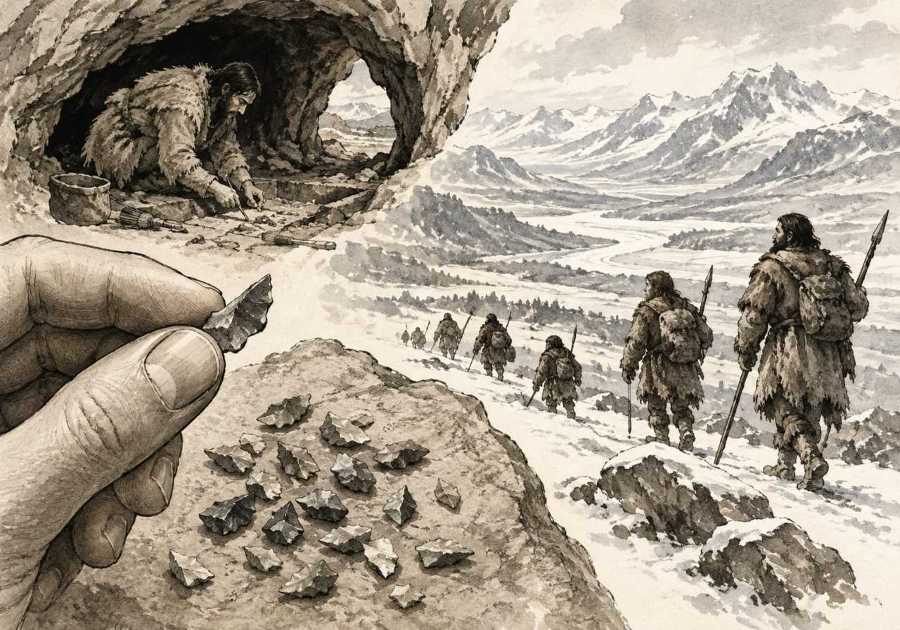
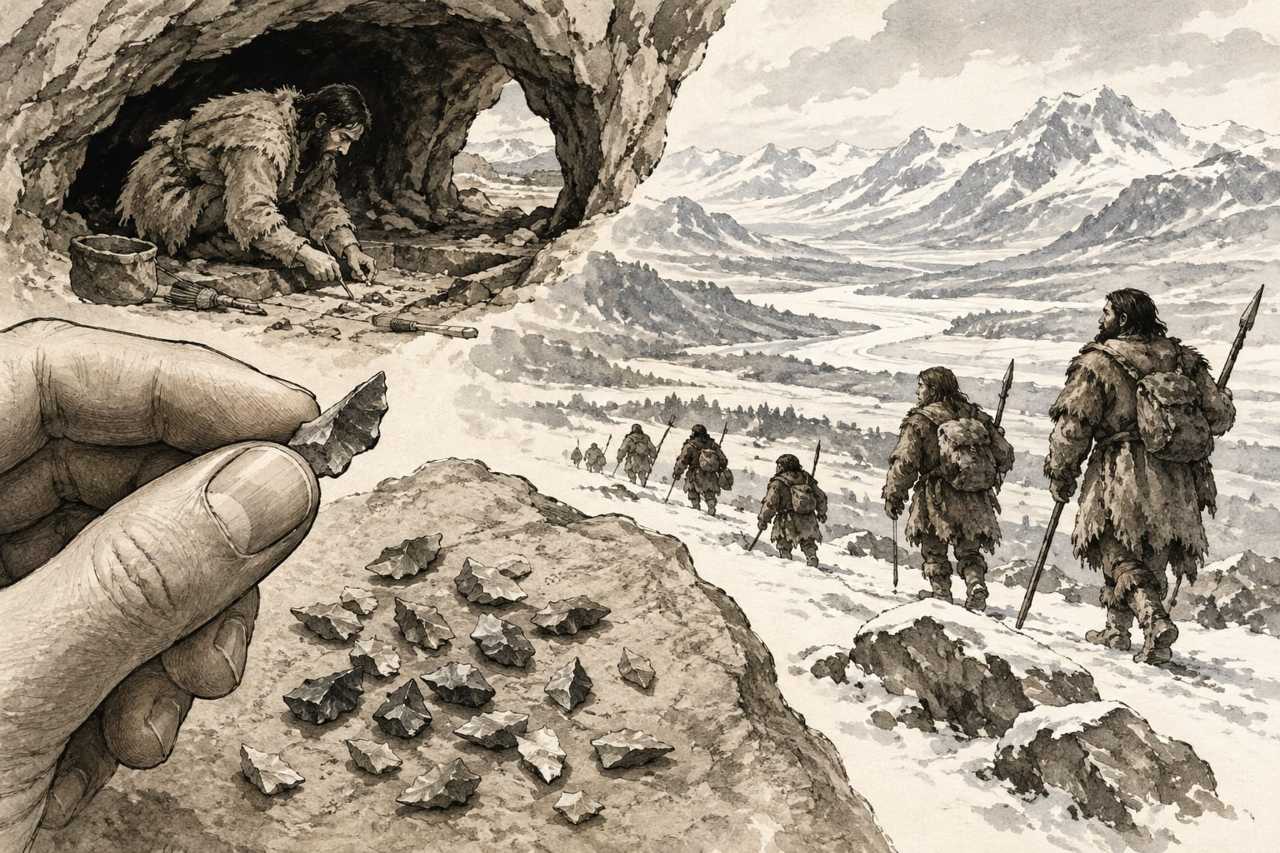
The headline finding is the contrast between two types of stone the researchers found at the site. Obsidian, a volcanic glass prized for sharp, durable edges, was hauled in from sources as far as 200 kilometers away. The obsidian pieces show repeated signs of reshaping and maintenance, which the team reads as evidence that these were long-term tools built to survive the wear of mobile life across difficult, high-altitude terrain.
Chert, by contrast, was sourced and worked locally, right at the cave, and used for short-term jobs before being left behind. That split between "carry it everywhere and keep fixing it" and "make it here, use it, drop it" is the kind of behavioral detail that does not usually survive in the archaeological record, because it depends on noticing patterns across thousands of small fragments rather than describing a handful of finished tools.
The method matters here as much as the conclusion. The researchers tracked fragments smaller than 20 millimeters, flakes most digs would barely bother logging, and used them to spot evidence of tool repair even in cases where the actual tool had been carried off elsewhere. That is a genuinely different way of reading a site. Instead of classifying a Paleolithic culture by the shape of the finished tools found in one place, which has been the standard approach for a long time, the team is arguing you can reconstruct movement and decision-making by looking at the debris left behind during maintenance.
The conclusion the study draws is that Ararat-1 Cave was not a settlement or a tool factory, but something closer to a maintenance-and-rest stop along a seasonal migration route. Malinsky-Buller put it plainly, saying the hunter-gatherers did not rely on a single way of doing things, and instead balanced portable long-distance toolkits against whatever local material was on hand, treating caves like this one as places to rest, repair gear, and plan the next leg of the journey.
What we don't know yet
The article does not say how the five layers at the site relate to each other in terms of time gaps, so it is unclear whether this pattern held steady across the full span of the late Middle Paleolithic or shifted as conditions changed. It also does not say how many individual obsidian sources were identified, just that some were up to 200 kilometers off, so the full map of where these groups were actually ranging is still fuzzy. There is no mention of how many people might have used the cave, how often, or for how long at a stretch. And while the study challenges the older method of classifying cultures by static tool shapes, the article does not say whether the researchers propose applying this fragment-tracking method to other sites to test it further.
The project had backing from the European Research Council and the Fritz Thyssen Foundation, which at least suggests this is a funded, ongoing line of work rather than a one-off paper.
If you follow Paleolithic archaeology, this is worth a look for the method alone, since reading micro-fragments for behavioral evidence is the kind of approach that could reshape how other cave sites get interpreted. If you just want a tidy story about clever cavemen, you already have it, and you can stop here.