The Hebrew University of Jerusalem announced on September 24, 2026, that five years of excavation in the Ophel, just south of the Temple Mount platform, have uncovered a monumental purification complex with three large public ritual baths, a stepped pool and a paved courtyard. One of the baths still stands 13.8 feet from its original floor to its original stone ceiling, a survival rate that is close to unheard of for Second Temple period Jerusalem.
What's actually new
The headline claim here is preservation, not discovery. Parts of this site have been known for decades: Benjamin Mazar's team exposed the central pool in the early 1970s, and Eilat Mazar uncovered part of the four-room building in 2013 and 2018. What's new is that Professors Uzi Leibner and Orit Peleg-Barkat, who took over the dig after Eilat Mazar's death in 2021, have now finished a fifth and final season and can describe the full complex.
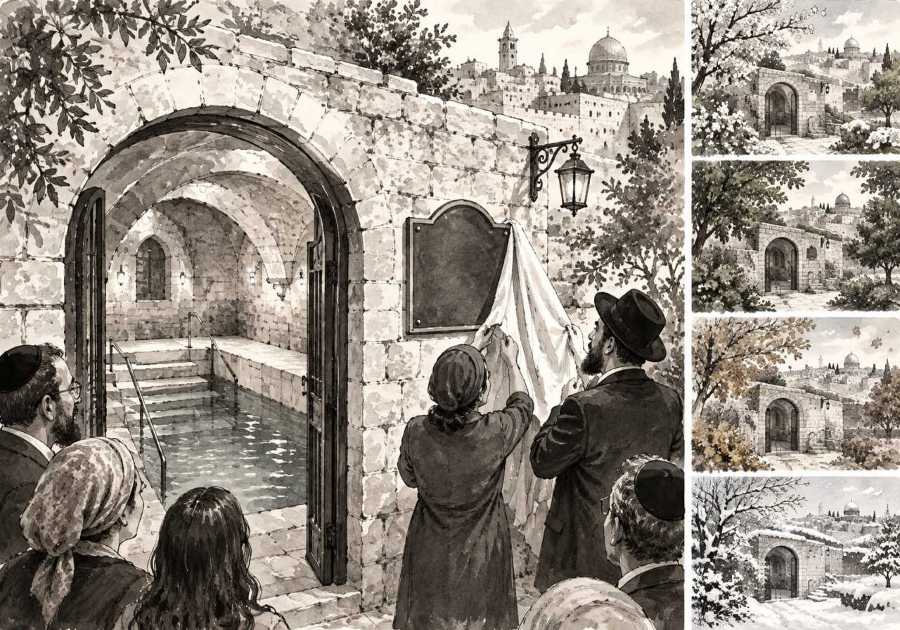
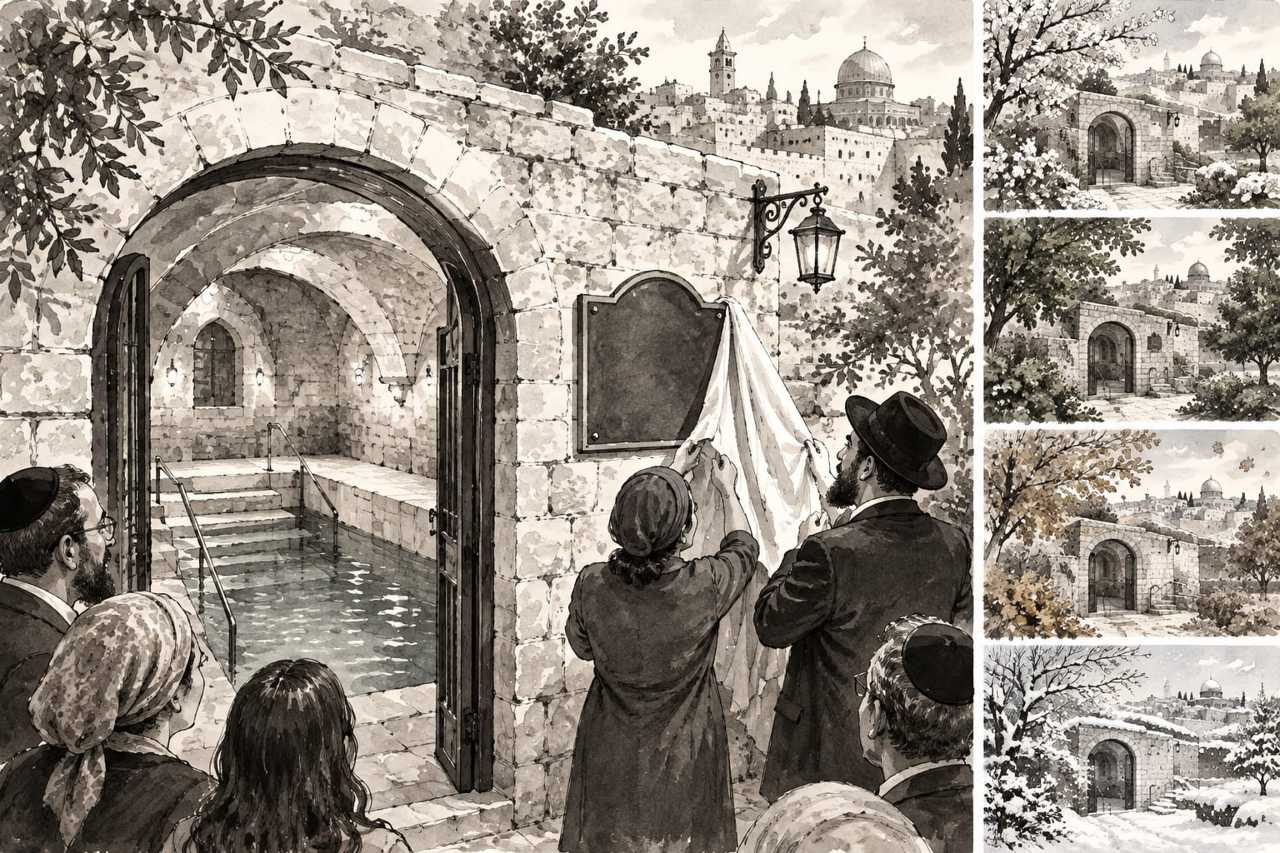
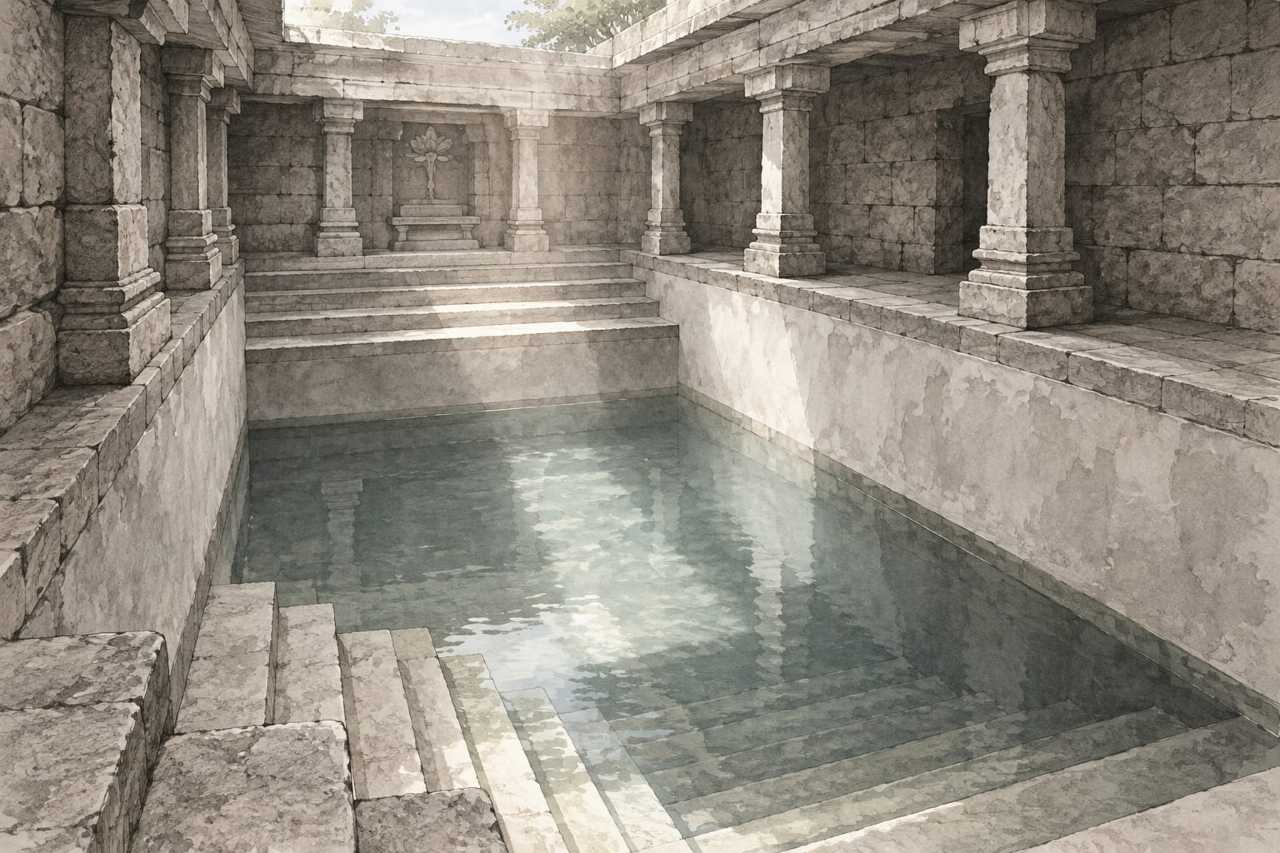
At its center sits a plastered pool roughly 39.4 by 31.2 feet, with steps descending from all four sides. On one side stand four finely built rooms, three of them identified as large public mikvaot, two with carved stone steps. A forecourt of dressed stone slabs connects the pool to the building. The whole thing covers about 3,014 square feet, and the Armstrong Institute of Biblical Archaeology, a partner on the project, has given it the nickname Beit haMikvaot, House of Mikvehs.
The standout find is one bath where the stone vault and the water shaft above it are both still in place. Leibner called it the "crown jewel" of the site, and for once that kind of line is earned rather than borrowed from a press kit. Our resident reviewer, who has sat through enough breathless dig announcements to be numb to the genre, says a ceiling that survives intact this close to the Temple Mount is the rare case where the superlative actually tracks the archaeology.
Beneath the baths runs a drainage system with channels over 6.6 feet high in places, tall enough to walk through, carrying water toward the Kidron Valley. The team also found dozens of coins from the First Jewish Revolt scattered across the floors and debris, including a silver half shekel from the revolt's third year and a silver tetradrachm from the Hellenistic period. Across all five seasons the Armstrong Institute counts well over a thousand coins total. An earlier, smaller ashlar complex with its own ritual bath lies underneath the main building, probably from the first century BCE, while coins date the later structure to around 10 CE, meaning it stood for about sixty years before Roman troops destroyed it along with the Temple in 70 CE.
What we don't know yet
Nobody has traced the channel that actually fed water into the baths. The university's own release says only that a branch of the aqueduct from the Hebron Hills "possibly" supplied it, while the Armstrong Institute's tunnel supervisor, Christopher Eames, is more confident it came from that long aqueduct. Those are two different confidence levels sitting in the same announcement, and no mineral or sediment study has been done to settle it.
There's no head count either. The complex sits near the Triple Gate and the university argues its size and placement suggest it served pilgrim crowds, but the find itself carries no number. Josephus claimed up to 2.7 million visitors at a single Passover, a figure most researchers already treat as wildly inflated, so it's not much of an anchor. Who exactly used these baths is also unresolved: Eames points to the quality of the stonework as a hint it may have served the upper classes or Temple workers, but that's a suggestion, not a conclusion. A peer-reviewed paper hasn't been published yet, and the Armstrong Institute says more will come once the research is written up.
Who should care
Anyone tracking Second Temple period Jerusalem or the archaeology of pilgrimage has a real, dated, physically intact structure to look at here, not just another reconstruction drawing. Readers who want firm numbers on how many people used it, or solid proof of where the water came from, will have to wait for the published research. Everyone else can file this under "worth watching" and move on.