TheCollector published a rundown this week of which cities named in the Bible have actual archaeological sites behind them, and which ones are still matters of educated guesswork.
What's actually new
Nothing here is a fresh dig or a new discovery announced this month. What the piece does is compile, in one place, the state of evidence for several cities that show up repeatedly in Scripture: Jerusalem's City of David, Jericho, Megiddo, Babylon, and Nineveh. If you cover enough archaeology stories, as I have, you develop a reflex for separating "we found something" from "we found something and can prove whose it was," and this article is honest enough to keep those two claims apart.
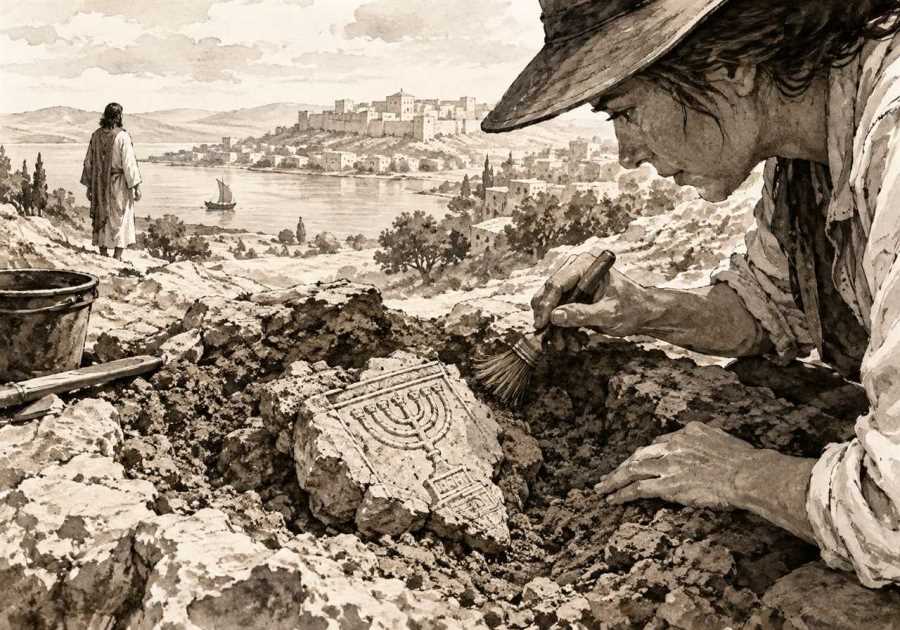
The City of David section leans on real, physical finds: the Stepped Stone Structure, clay bullae stamped with names that also appear in Biblical texts, and the Siloam Tunnel inscription, which commemorates the completion of a water tunnel the article connects to King Hezekiah via 2 Kings 20:20. That's about as solid as Biblical archaeology gets: an inscription, in situ, describing an engineering project that a Biblical text also describes.
Jericho is treated with more caution, and rightly so. Tell es-Sultan, a World Heritage site in Palestine, is one of the longest continually inhabited settlements anywhere. Charles Warren flagged the site back in 1868 because of its closeness to a spring with its own Biblical backstory in 2 Kings. Decades later, excavators found heavily fortified walls that look like they were taken down by fire or an earthquake. John Garstang called them the walls of Joshua 6 in 1930. Kathleen Kenyon came along later with better dating methods and placed the destruction centuries before Garstang's timeline. The article doesn't pretend this got settled. It didn't.
Megiddo gets a similar treatment. The site has a six-chambered gate that matches gates found at Hazor and Gezer, which lines up with a verse in 1 Kings crediting Solomon with building projects at all three. Yigael Yadin made that connection in the 1950s. Other scholars have been contesting his dates ever since, and the article says so without picking a side. What does seem to hold up more broadly, per the piece, is that this location is generally accepted as the Armageddon of Revelation 16:16, horse stables, palace remains, water systems, ivory artifacts and all.
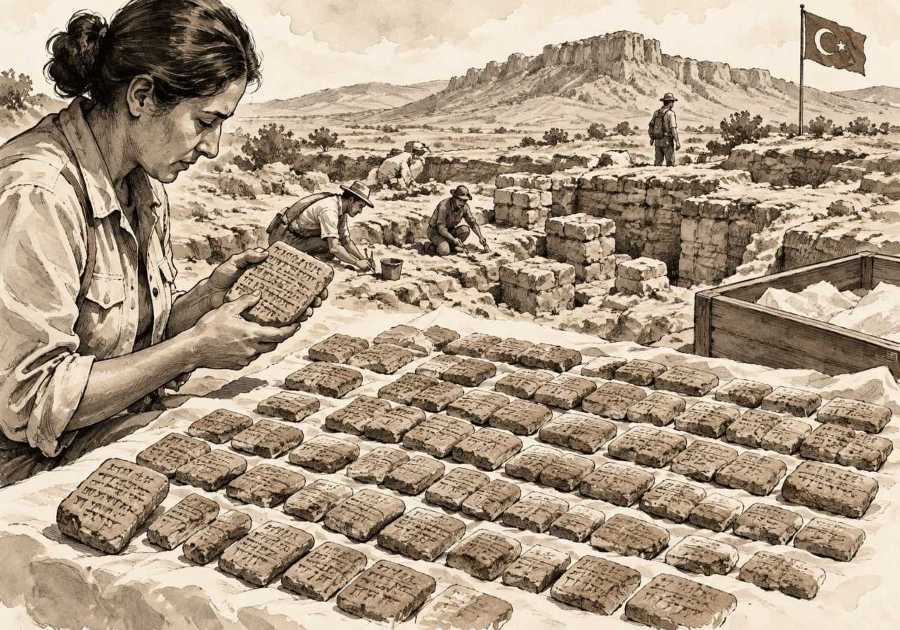
Babylon and Nineveh round things out as the two Mesopotamian heavy hitters. Babylon's excavation, led by Robert Koldewey starting in 1899, turned up fragments of the Ishtar Gate and bricks stamped with Nebuchadnezzar II's name, matching the empire described in 2 Kings 25. Nineveh was dug up earlier, in the 1840s, by Austen Henry Layard, who confirmed the city really was enormous, consistent with the "three days to go through it" line in Jonah 3:3. The library discovered there, with texts that parallel the Biblical flood narrative, is probably the single most interesting artifact mentioned in the whole piece, though the article doesn't go deep on what those parallels actually are.
What we don't know yet
This is where I have to be blunt, because I've sat through enough of these "archaeology proves the Bible" roundups to know the difference between evidence and inference, and this article, to its credit, mostly keeps that line visible even when it doesn't say so outright.
For one, dating remains the central unresolved issue across almost every site mentioned. Jericho's wall collapse could be centuries off from the Biblical timeline depending on whose stratigraphy you trust, Kenyon's or Garstang's. The article doesn't resolve this, and neither has the field, apparently.
For another, attribution is not the same as confirmation. The Megiddo gate "matching" structures at Hazor and Gezer doesn't by itself prove Solomon built any of them. Yadin thought so. Other scholars disputed it. The piece reports this disagreement honestly but doesn't tell us where the current scholarly consensus, if there is one, actually sits today. Readers are left with "contested" and nothing more specific.
The article also doesn't explain what methods, beyond stratigraphy, epigraphy, and pottery typing mentioned early on, are currently being used to re-examine these sites, despite a closing line about "new technologies" continuing to reveal things. What technologies? Applied where? That's left vague.
There's also no mention of how these findings are received outside devotional or apologetic contexts. The piece is written from a theology-adjacent angle, by someone with a Master of Theology credential, and it's upfront about that lens. Fair enough. But a reader wanting to know how, say, mainstream Near Eastern archaeology departments weigh these same finds independent of Biblical framing won't find that here.
Finally, nothing in the article tells us what happens next. Are there ongoing excavations at any of these five sites right now that might shift the dating disputes one way or the other? The piece reads as a historical survey, not a status report, so that's simply outside its scope.
I don't say any of this to dismiss the work. Having watched a lot of "proof of the Bible" claims roll through headlines over the years, most of them oversold, I can say this piece is unusually careful about naming the actual disputes instead of papering over them. It credits Garstang's claim and then immediately credits Kenyon's correction. It credits Yadin and then flags that his peers didn't buy it. That is rarer than it should be in this corner of journalism, where it's tempting to let a dramatic quote from Joshua or Jonah do the work that stratigraphy should be doing instead.
So who should care? People interested in Biblical history as a historical question, not just a devotional one, will get a genuinely useful map of where the physical evidence stands at these five sites and where the arguments still are. Pilgrims and tourists planning a trip to Jerusalem's City of David or the ruins at Megiddo will find the context useful too.
Who can skip it: anyone hoping for a breakthrough discovery, a new dig, or a settled answer on dating disputes that have been running since Kenyon and Garstang disagreed decades ago. This is a survey of known ground, competently assembled, not news of anything new turning up in it.