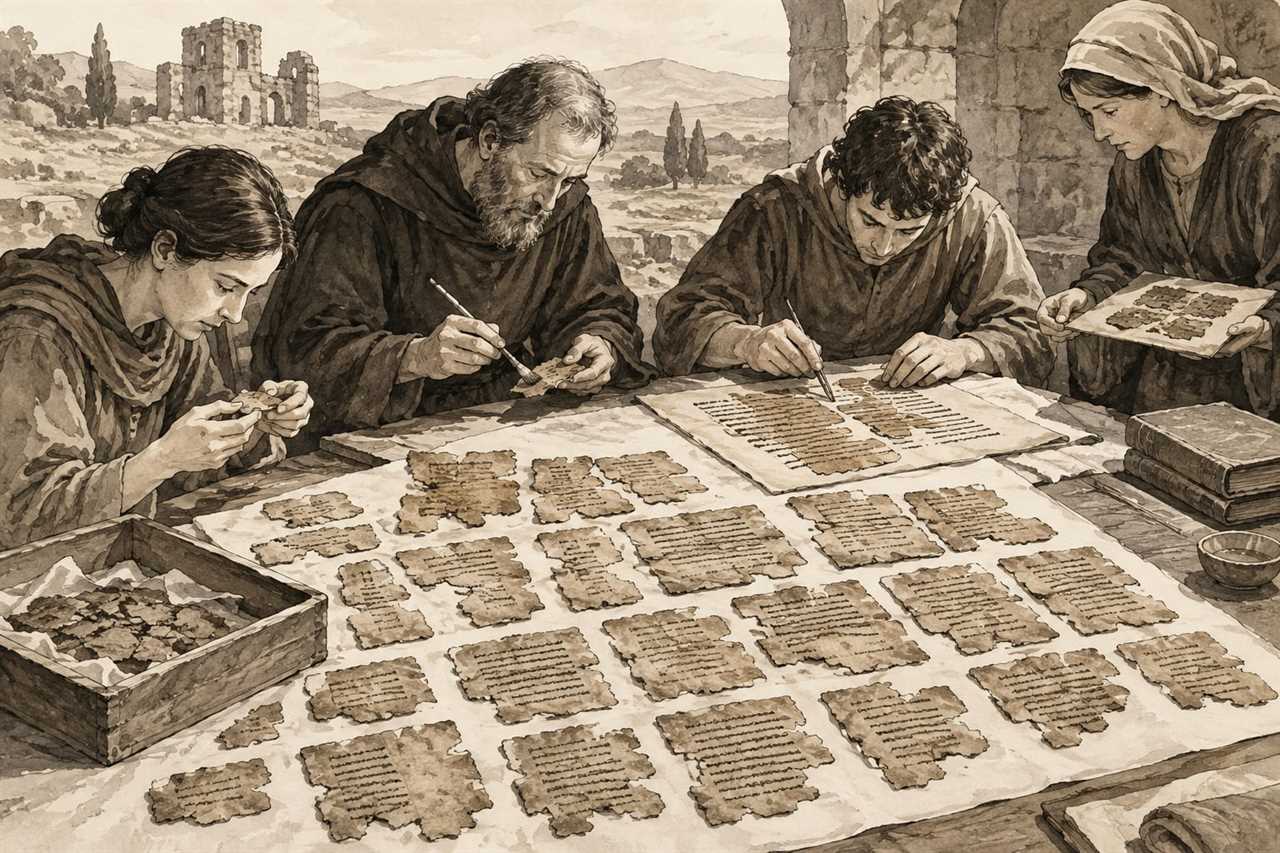
An international team led by the University of Glasgow has reconstructed 42 pages from Codex H, one of the oldest surviving New Testament manuscripts, pulling text out of parchment that was cut up and repurposed roughly 800 years ago.
The pages, reported by Ancient Origins, come from a manuscript containing the Letters of the Apostle Paul along with commentary written alongside them. The find matters not because someone unearthed a new scroll in a cave, but because scholars managed to read pages that were never supposed to be readable again.
What's actually new
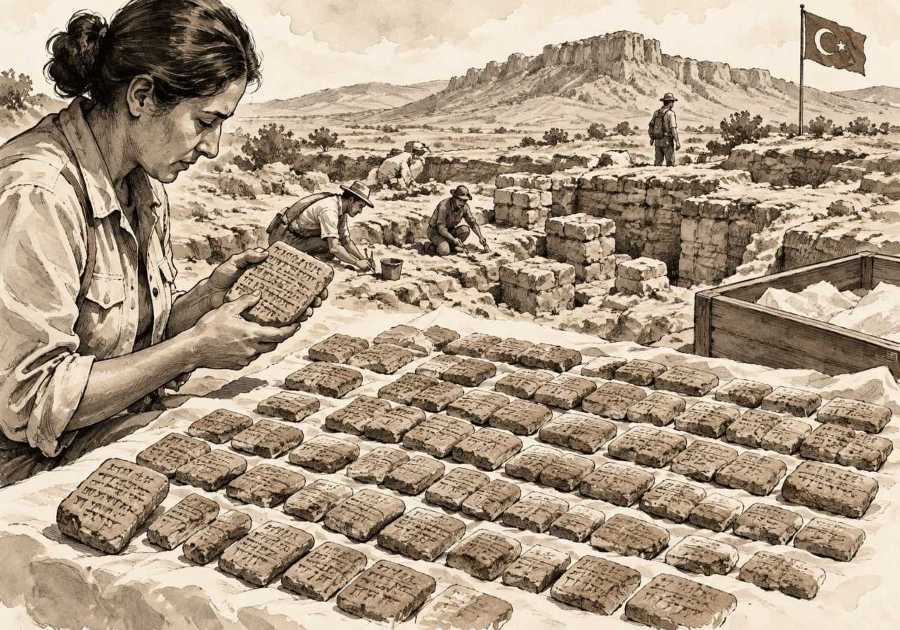
Codex H was broken apart in the 13th century by monks at the Great Lavra on Mount Athos. Parchment was costly, so instead of preserving the old codex intact, they cut up its pages and used them as binding material for other books. The fragments ended up scattered across libraries in Greece, Italy, France, Russia and Ukraine, and a large portion of the manuscript was long assumed gone for good.
What changed is the imaging, not the manuscript itself. The team used multispectral imaging, capturing the parchment under a range of light wavelengths from ultraviolet to infrared, to pick up ink traces the naked eye cannot see. Professor Garrick Allen, who worked on the project, explained that chemical residue from the original ink left faint "imprints" on the leaves that had been pressed against them for centuries. Scholars used those ghost impressions to reconstruct what was written on pages that no longer physically exist in readable form.
The recovered material includes an ancient system of chapter divisions that differs from how the Bible is divided today, along with scribal notes and historical references apparently meant to help readers understand the epistles. That is a real contribution to understanding how early Christians organized and studied scripture, not just a restoration exercise. Allen called it, in his own words, "nothing short of monumental," given how important Codex H already is as a witness to the text of the New Testament.
I have sat through a fair number of manuscript-discovery stories, and most of them lean hard on the word "lost" to dress up something fairly minor. This one earns the word. The pages were not misplaced in a drawer somewhere. They were cut up and bound into other books eight centuries ago, and the information in them was considered gone. Recovering 42 pages of actual content through ink-ghost analysis is a genuine technical and scholarly achievement, not a press-release flourish.
What we don't know yet
The report does not say how many total pages or fragments of Codex H exist across all the libraries holding pieces of it, so there is no way to judge what fraction of the original manuscript these 42 pages represent. It also does not specify how old Codex H actually is beyond calling it one of the oldest New Testament manuscripts, nor does it name the specific libraries in Greece, Italy, France, Russia and Ukraine where the fragments were found, beyond mentioning those countries generally.
There is no detail here on what, if anything, in the recovered chapter-division system or commentary changes current scholarly understanding of Paul's letters themselves, only that it documents how early readers engaged with the text. And the article gives no timeline for when the full findings will be published or made available for other researchers to examine.
Who should care
Biblical scholars, manuscript historians and anyone interested in how early Christian texts were copied, annotated and divided will find this genuinely worth following. It is also a nice case study for anyone curious about what multispectral imaging can do with damaged or deliberately destroyed historical documents.
If you are looking for a discovery that rewrites doctrine or settles a theological argument, this is not that. It is a careful, technical recovery of material that fills in the edges of something scholars already study closely. Worth paying attention to if that is your field. Safe to skip if it is not.