A US research group drilling into the Durupınar Formation near Mount Ararat says its bit snapped four to five metres down on a layer harder than limestone, and the broken-off material is now headed to a lab to find out what it actually is.
What's actually new
The group, Noah's Ark Scans, released a preliminary radar report this week claiming the 157-metre boat-shaped mound in Türkiye's Ağrı Province contains a "man-made object" rather than solid rock. Dr Khosrow Bakhtar, a University of Utah-trained mining engineer who has spent more than four decades building tunnel-detection systems for US defence agencies, led the survey and supplied the coordinates for the team's core holes. He described what the radar shows as organised and structural, while stopping short of calling it anything specific. His own words: it could be a ship, it could be a spaceship.
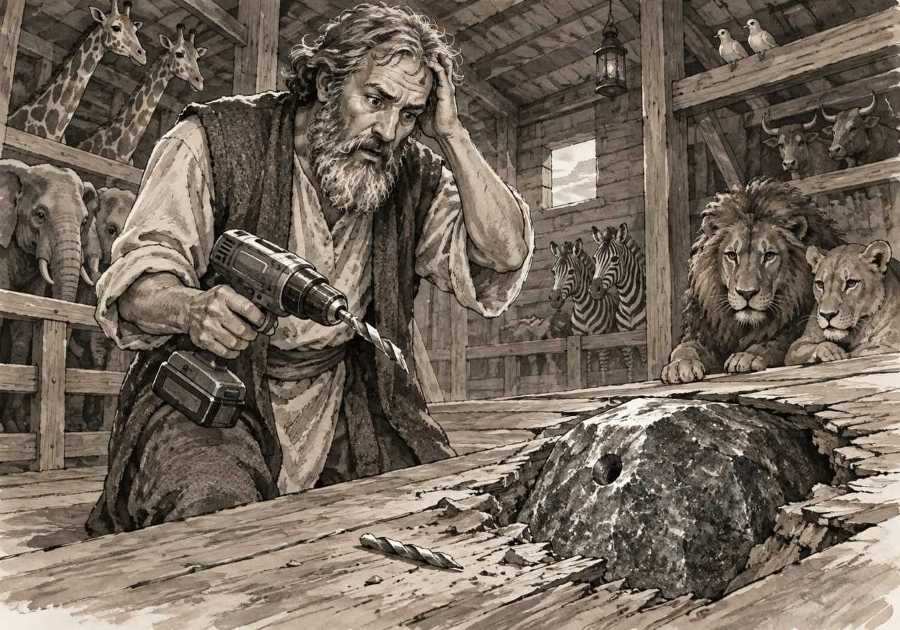
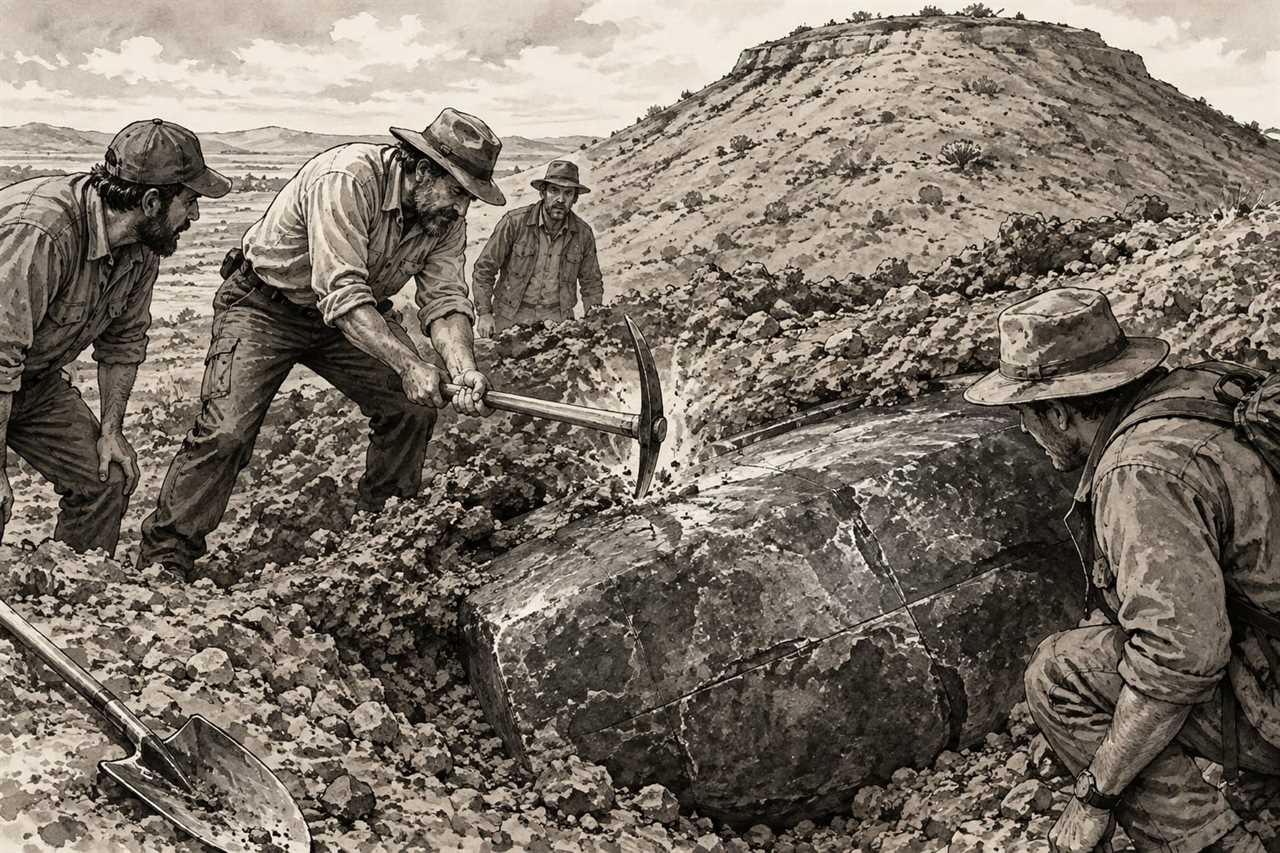
The drilling itself reached as deep as 18 metres across multiple holes, with no bedrock or solid limestone turning up inside the formation, according to the team. In one hole within the boat outline, the bit broke on a harder layer at the four-to-five-metre mark. Andrew Jones, the group's founder, called this a major breakthrough in the team's ability to investigate the site, which is a strong way to describe a broken drill bit, but fair enough if the point is that something down there resisted the tool.
What's genuinely new here is the access and the equipment, not a discovery. The cores reportedly contain organic-rich layers, and the group plans to lower a camera drone called GOPHER, named for the gopher wood of Genesis, into voids the radar mapped. Laboratory results are expected over the northern winter, with a fuller scientific report promised for spring.
I have sat through enough breathless press releases about buried arks, biblical geology and radar "anomalies" to have developed a fairly thick skin, and this one earns some credit for restraint it didn't have to show. Jones himself has already walked back the louder version of the story, stating plainly that the team has not identified any material as ancient wood and has not established its age. He has also noted that the hard layer could just as easily be ordinary rock lodged in the surrounding earth as petrified wood, and that organic matter collects naturally in hillside soil anyway. That is a more honest statement than most people chasing this particular site have managed in the past thirty years.
What we don't know yet
The obvious gap is the one at the centre of the story: nobody yet knows what broke the drill bit. Petrified wood, mineralised rock, a stray boulder, all remain on the table until the lab work is done, and the source gives no timeline more specific than "northern winter" for initial results and "northern spring" for a detailed report.
There's also history working against the romantic reading. A 1996 paper by geologist Lorence Collins and ark researcher David Fasold found no fossilised wood, carbon traces or reed fragments at the site in earlier digs, and samples once identified as rib timbers or deck beams turned out to be andesite or basalt pebbles. Collins went on to argue the boat shape formed naturally, though Fasold floated the idea that the mound could still be the location ancients regarded as the flood ship, which Collins thought was an interesting notion rather than an endorsement.
None of this means the current team is wrong. It means wood claims at this exact spot have a bad track record, and "even identifying ancient wood would not by itself establish human construction," as Jones himself cautions. Meanwhile actual living timber is growing nearby and being studied properly: Turkish researchers led by Sivas Cumhuriyet University archaeologist Professor Cenker Atila began examining a 161-hectare birch forest on Ararat's eastern cone last year, with a public statement promised once that lab work wraps up.
So who should care? Anyone following the archaeology of the site, or curious about what radar and core drilling can actually tell you before the lab weighs in. Everyone else can file this under "ask again in spring," when there's either a wood sample with an age attached or there isn't.