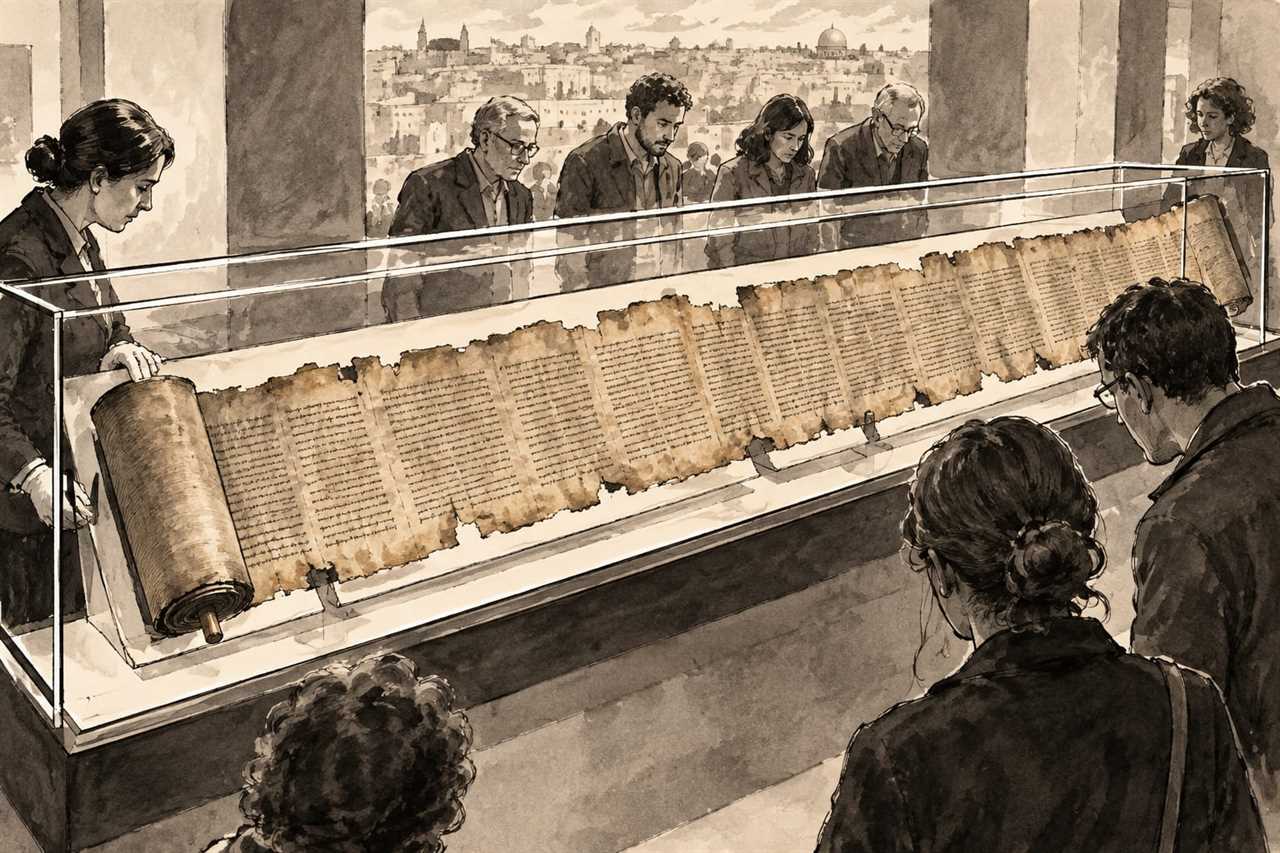
Jerusalem's Israel Museum has put the Great Isaiah Scroll on full public display for the first time in nearly sixty years, as the centerpiece of an exhibition called "A Voice from the Desert," marking the 60th anniversary of the museum and its Shrine of the Book.
CBN News got a look at the scroll and the building that houses it, and sat down with curator Hagit Maoz to hear the story behind it, which is the part worth paying attention to once you get past the anniversary math.
What's actually new
The headline fact here is simple: the scroll has not been shown in its entirety since 1968, and now it is, inside the Shrine of the Book, the structure built to resemble the lids of the clay jars the scrolls were originally found in. According to Maoz, the Great Isaiah Scroll runs seven meters and 17 centimeters, stitched together from 17 sheets of animal skin with linen thread, carrying 54 columns of ancient Hebrew. It contains all 66 chapters of the Book of Isaiah as it exists today, and Maoz dates it to the end of the second century, placing it around 120 to 125 BC.
I have sat through enough museum anniversary events to be suspicious of the word "jewel," which Maoz used to describe the scroll's place in the collection. But in this case the description is not really doing much work the object itself hasn't already earned. A nearly complete biblical text that survived two thousand years in a jar in a cave is not something a press release needs to dress up.
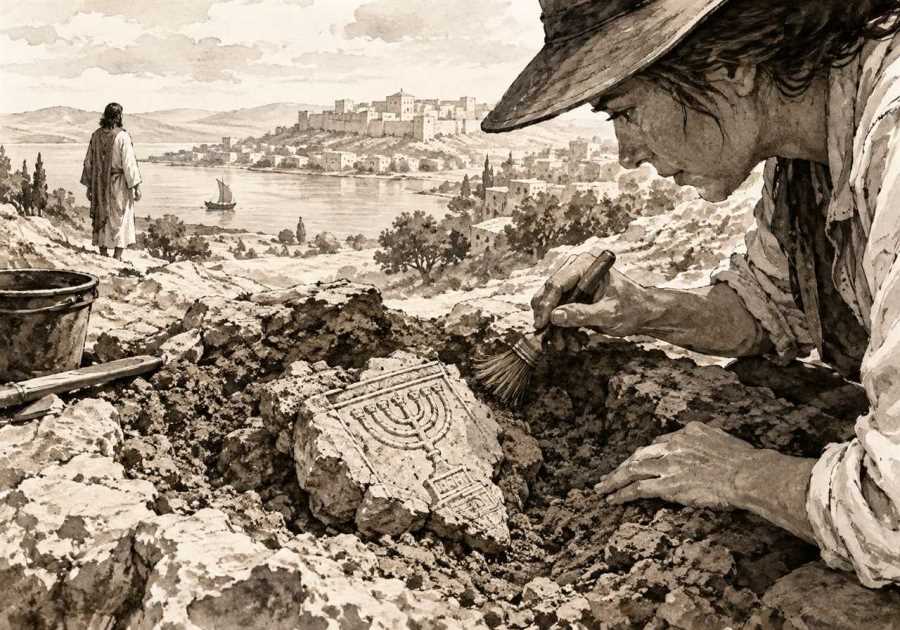
The exhibition also leans into the backstory, and that's where the piece earns its space. The scroll was among the first manuscripts found in 1947 near Qumran, by a Bedouin shepherd, in what became one of the defining archaeological finds of the century. Maoz points to the actual jars the shepherd pulled from the cave, which are on display alongside it.
The timing is the detail CBN's piece keeps circling back to, and it is a genuinely strange coincidence worth noting without inflating it. On November 29, 1947, according to Maoz, Professor Eleazar Sukenik traveled to Bethlehem and purchased two of the scrolls and their jars. That same night, the United Nations voted to partition the land, setting the stage for the State of Israel. Make of that what you will.
The scroll's later travels are their own small thriller. Mar Athanasius Samuel, head of the Syrian Orthodox Church in Jerusalem, acquired four of the first seven scrolls, including the Isaiah scroll, in 1947. He took them out of the country during the 1948 war and eventually to the United States, where in 1954 he advertised them for sale in the Wall Street Journal, sandwiched between ads for washing machines and farm equipment. Sukenik had died the year before. His son, archaeologist Yigael Yadin, spotted the ad while in New York and arranged a secret purchase on Israel's behalf. Maoz showed CBN his handwritten notes marked "emergency" and "top secret." Seven years after they emerged from the desert, the scrolls made it home.
What we don't know yet
CBN's report doesn't say how long the full display will run, what conservation conditions allow it to be shown this openly after decades of partial exposure, or whether the museum plans to rotate it back out of view once the anniversary year ends. There's also no detail here on visitor numbers, ticketing, or whether any of the other three scrolls Yadin purchased are part of the same exhibition. Those are the practical questions anyone planning a trip would want answered, and the source leaves them open.
Who should care
If you have any interest in biblical history, archaeology, or the tangled modern history of Jerusalem, this is a rare chance to see the genuine object rather than a replica, and worth building a visit around. If you're looking for breaking news about terms, pricing, or exhibition logistics, there isn't any here yet. Everyone else can file this under "interesting coincidence, worth the trip if you're already in Jerusalem."