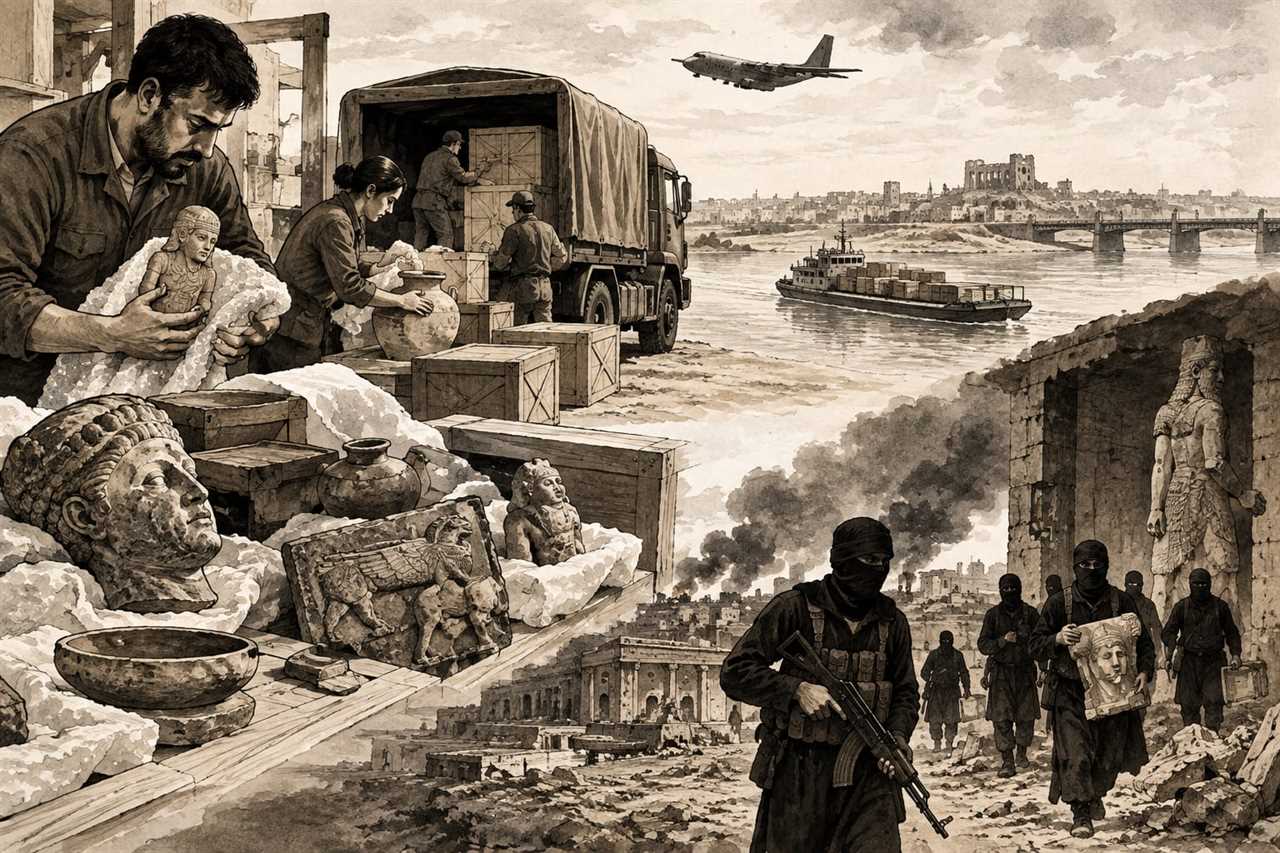
A new study has surfaced on how Syrian archaeologists pulled roughly 30,000 artifacts out of the Deir ez-Zor Museum before ISIS took the city, part of a wider effort that moved some 300,000 museum objects to safety across the country.
The study, published in the journal Museum Management and Curatorship and first reported by news agency SWNS with additional coverage from Phys.org, lays out details of an operation that happened back in 2014 and 2015 but is only now getting a full public accounting. The author is Maamoun Abdulkarim, who at the time was director-general of Syria's Directorate-General of Antiquities and Museums and currently teaches archaeology and history at the University of Sharjah in the United Arab Emirates. He ran the rescue himself, which makes him about as close to a primary source as this kind of story gets.
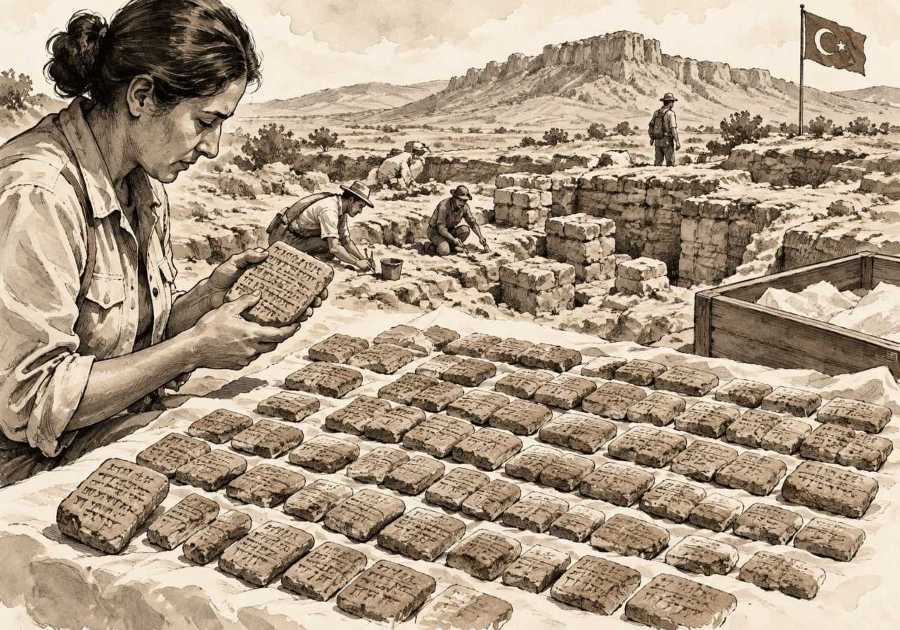
The Deir ez-Zor Museum wasn't one of Syria's biggest by any measure, but its collection punched well above its size. It held material from Mesopotamian sites as significant as Halaf, Dura-Europos and Mari, including cuneiform tablets dug up at Mari itself, along with ancient statues and jewelry spanning thousands of years. That's the kind of collection that doesn't get a second chance if it's left behind.
What's actually new
The core of what's new here isn't that a rescue happened. Reports of antiquities being moved out of Syrian museums during the war have circulated for years. What this study adds is Abdulkarim's own detailed framing of the decision-making behind it, and he's blunt about what that actually required. He describes the operation as something that went well beyond logistics, involving institutional resilience, trust between people under pressure, and fast adaptation when circumstances kept shifting. He also makes a point of the geography: the museum was connected to a military airport by a single narrow corridor, which made the whole operation as vulnerable as it was urgent.
He also ties the timing to a specific regional trigger. The 2014 surge of ISIS territorial gains coincided with the fall of Mosul in Iraq, the looting of its museum and the destruction of antiquities tied to Nineveh and Assyria. Abdulkarim says that combination of events is what pushed Syrian authorities to scramble and accelerate protection plans for museums in cities that looked like they could fall or be besieged next. That's a useful piece of context missing from most retellings of this story, which tend to focus on the artifacts and skip the chain of events that forced the decision.
His broader argument, stated plainly in the study, is that waiting for ideal conditions during an armed conflict is often riskier than acting without certainty. He frames heritage protection in wartime as being as much about timing and trust as it is about the objects themselves.
I have sat through enough breathless press releases about "daring rescues" to be generally allergic to the phrase, but the specifics here, the narrow corridor, the Mosul trigger, the direct account from the person who ran the operation, actually hold up as more than marketing. That is rarer than it should be in this space.
What we don't know yet
The study, at least as reported, doesn't lay out the operational specifics people will want: how the artifacts were physically transported, where they ended up being stored, how long the full relocation of 300,000 objects took, or what became of the Deir ez-Zor Museum building itself once it was stripped of its collection. There's also no detail here on the condition of the objects now, whether any were damaged in transit, or what role international organizations may have played versus Syrian authorities acting alone. Those are the kinds of questions a study abstract and a wire report don't always answer, and nothing in the coverage suggests they're addressed elsewhere in the paper either.
Who should care
Anyone interested in cultural heritage protection during conflict, museum professionals thinking through crisis planning, and people following the broader story of what survived Syria's war will find something worth reading here. If you're just after artifact photos or a dramatic narrative, this study probably won't scratch that itch. It's a case study, not a highlight reel, and it reads like one.