
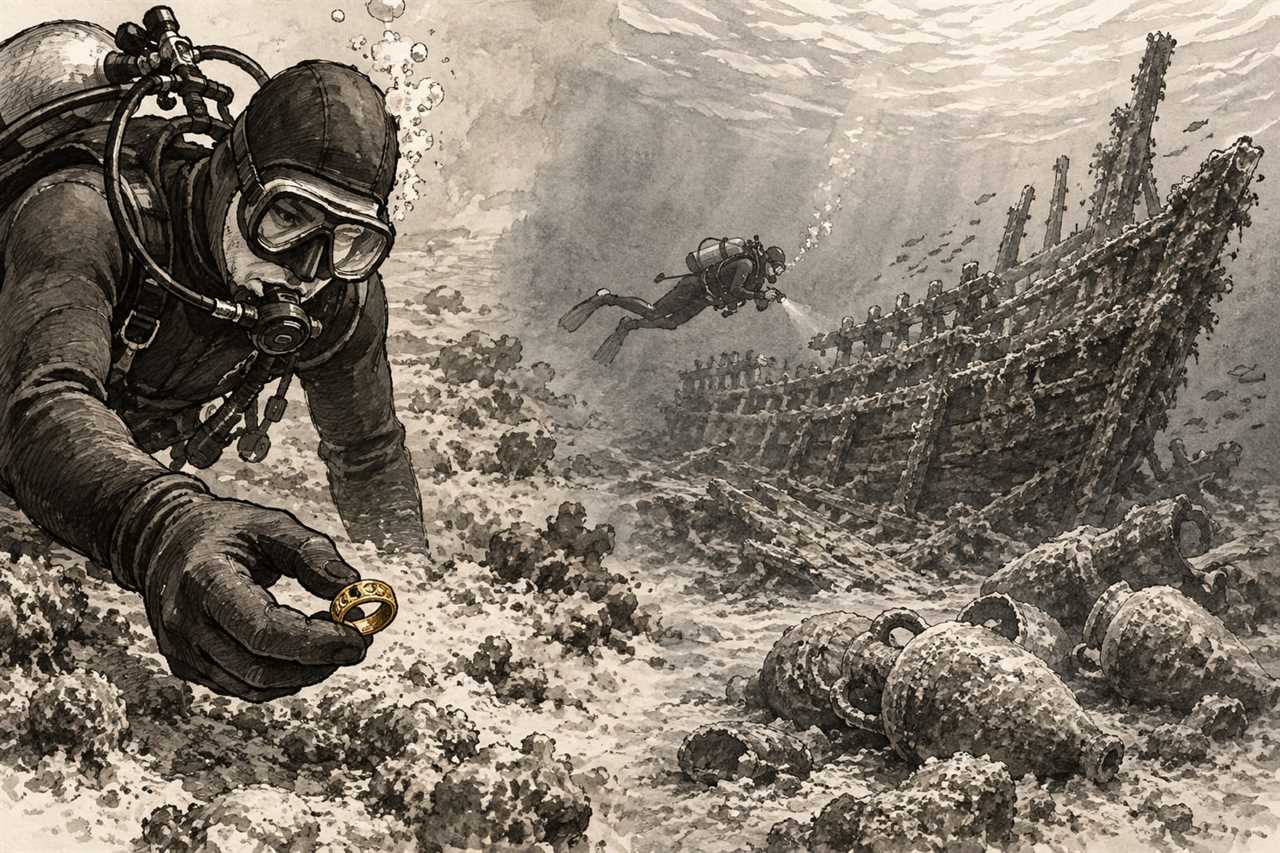
Divers working off the coast of Israel have reported finding two shipwrecks separated by roughly a thousand years, along with a gold ring depicting the Good Shepherd, according to a report carried by The European Times.
That is the whole of what has surfaced so far: two wrecks, a large gap in time between them, and one gold ring with a Christian motif that has survived long enough on the seabed to be recognizable. Everything else is the kind of detail that usually gets filled in over the following weeks, once conservators get the objects into a lab and archaeologists work out what they are actually looking at.
What's actually new
The genuinely new piece of information here is the discovery itself: two separate wrecks, found close enough together that divers (or archaeologists, the report does not specify who found what) were able to connect them, with roughly a millennium of history between the ships. That is not a small claim. Finding one wreck off the Israeli coast is a regular occurrence given how much maritime traffic has passed through that stretch of the Mediterranean over the centuries. Finding two in proximity that are a thousand years apart in age is the kind of thing that gets write-ups rather than being filed quietly.
The ring is the object most likely to get attention, and for good reason. A gold ring depicting the Good Shepherd is a recognizable piece of early Christian iconography, the kind of image that shows up on rings, lamps, and mosaics from the late Roman and Byzantine periods. A ring surviving underwater in good enough condition to be identified is not routine. Gold does not corrode the way iron or bronze does, which is part of why these pieces turn up looking almost new centuries after they went down, but that does not make the find any less notable. It is one tangible object from one wreck, and the report treats it as the centerpiece of the story.
I have sat through enough breathless dispatches about underwater finds to know the difference between an actual discovery and a press release dressed up to sound like one. This one reads like the former, mostly because it is restrained. There is a find, there is a description, and that is it. No sweeping claims about rewriting history, no dramatic adjectives doing the work that evidence should be doing. That restraint is worth noting on its own, because it is rarer than it should be in this corner of reporting.
What we don't know yet
The report does not say where exactly off Israel's coast the wrecks were found, which matters because location tells you a great deal about likely cargo, route, and era even before artifacts are dated. It does not say who conducted the dive, whether this was a planned archaeological survey or an incidental find by recreational divers, which is a common way these things surface in Israeli waters. It does not give a date range for either wreck beyond the "thousand years apart" framing, nor does it say what evidence supports that gap. It does not describe what else was recovered, if anything, from either site, and it does not say what will happen to the ring now, whether it goes into a museum collection or further study.
Those are not small gaps. A find like this usually comes with a dating method, a custodial authority, and some indication of what the wrecks were carrying or where they were headed. None of that is here yet. It may show up in follow-up reporting, or it may not, since underwater archaeology stories in this region sometimes get one cycle of coverage and then quietly disappear from the news until a museum exhibit surfaces years later.
So: a real find, lightly reported. The ring is worth knowing about. The wrecks are worth watching for more detail. Anyone with a casual interest in Mediterranean archaeology or early Christian artifacts should file this away and wait for the fuller account, which usually comes once institutions start speaking on the record. Anyone looking for a complete picture right now can safely wait. There is not enough here yet to reward a deep read, only enough to flag that something is coming.