The BBC World Service has released a new episode of its long-running podcast Witness History, this one on the discovery of the Dead Sea Scrolls in 1947, built around archive tape of British archaeologist Gerald Lankester Harding recorded in 1949.
What's actually new
What's new here isn't the Dead Sea Scrolls story itself, which has been told a thousand times in documentaries and museum plaques. What's new, or at least notable, is the source material. The episode leans on a BBC recording made just two years after the discovery, with Harding, who was directly involved in the early investigation, describing the find, the dig that followed and the attempt to work out where the scrolls had come from and what they meant. That's a genuine get: a voice from inside the moment rather than a modern narrator reading from a Wikipedia summary.
The episode was produced by Helen Ledwick with the BBC Archives, and it runs with the show's usual format: about nine minutes, one voice, one moment, no filler. If you've listened to Witness History before, you know the shape of it. If you haven't, the pitch is straightforward: real testimony, one clear story, short enough to fit into a tea break.
I've sat through a fair number of history podcast launches and relaunches, and most of them lean on the same trick, which is a breathless narrator promising you something "untold" that was, in fact, told extensively last Tuesday on three other shows. Witness History doesn't really do that. It just hands you the tape and gets out of the way. That's partly why our review desk keeps coming back to it when the headlines promise more than the audio delivers elsewhere. We don't get excited easily around here, and this one earns its spot mostly by not trying too hard.
The broader context the BBC gives for the series is worth noting too. Witness History apparently covers an enormous range: Boko Haram, the Chernobyl clean-up, the Tabasco floods, Portugal's worst train disaster, the invention of the air fryer, BlackBerry, YouTube, Alexa, GPS, superglue, the shopping trolley and bubble tea. George Harrison and Ravi Shankar get an episode. So does the night Siegfried and Roy's Las Vegas show ended in a tiger attack. It's an odd, wide net, and the Dead Sea Scrolls episode fits into that net as one more entry rather than a flagship event.
What we don't know yet
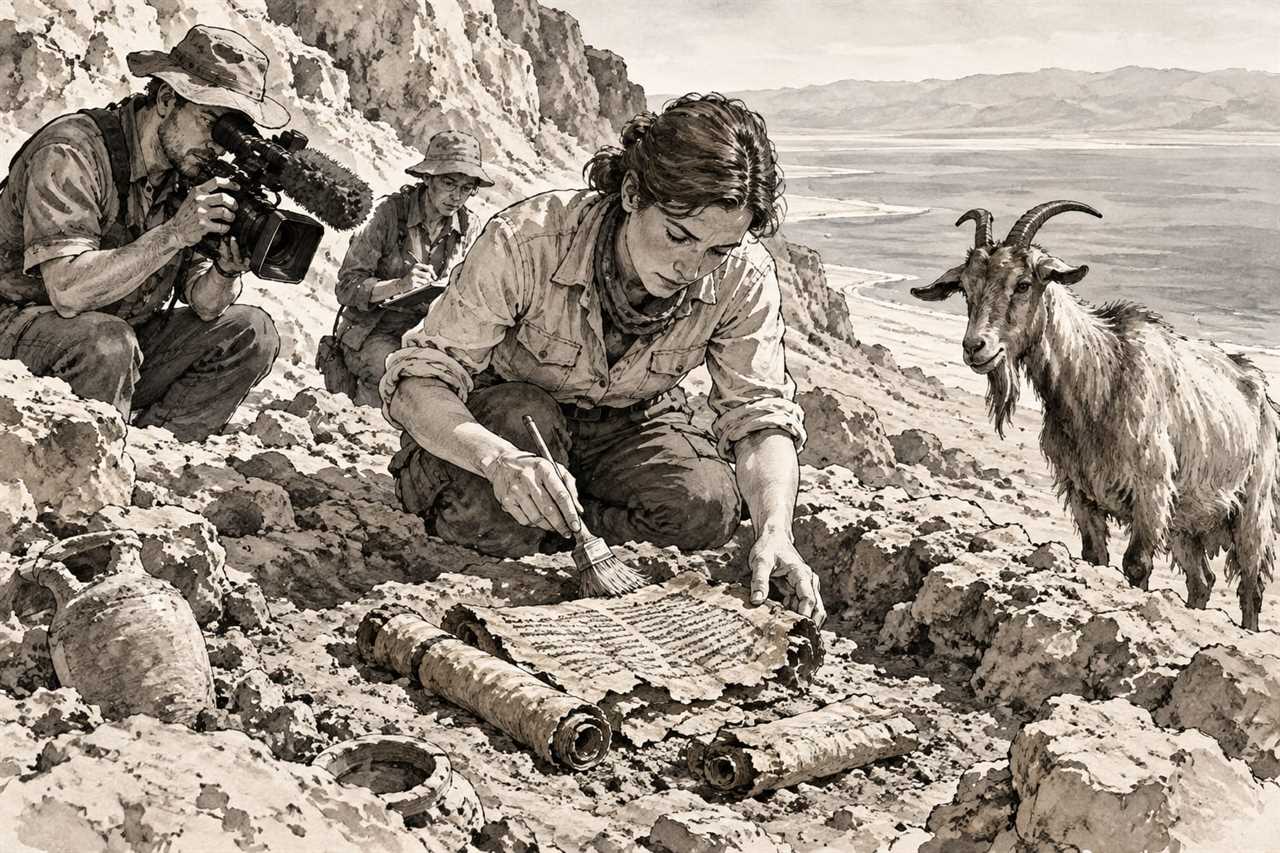
The BBC's description doesn't actually detail what Harding says in the recording beyond the broad strokes: how the scrolls were found, the excavation, the search for their origins and significance. We don't get specifics on what the goat had to do with it beyond the familiar outline that its disappearance led to the discovery, which the source mentions only in passing. There's no detail here on which scroll fragments were involved, where exactly the find took place, or what Harding's role as Director of Antiquities of Jordan, mentioned only in a photo caption, actually involved day to day.
We also don't know how the episode handles the gaps in the historical record around the scrolls' authentication and transport in the chaotic years after 1947, since the summary doesn't touch on that at all. And there's nothing in the source material about listener numbers, reviews, or how this episode compares to the show's other archive-based instalments. If you want a verdict on whether Harding's recording is riveting or merely dutiful, you'll have to listen yourself. The BBC hasn't told us, and neither has anyone else yet.
So: worth nine minutes if you want to hear history described by someone who was actually there, rather than reconstructed by someone who wasn't. People who already subscribe to Witness History will add it to the pile without needing convincing. Everyone else, especially anyone hoping for new scholarship on the scrolls themselves rather than a period radio voice recalling the dig, can probably let this one pass and wait for the next episode about bubble tea.