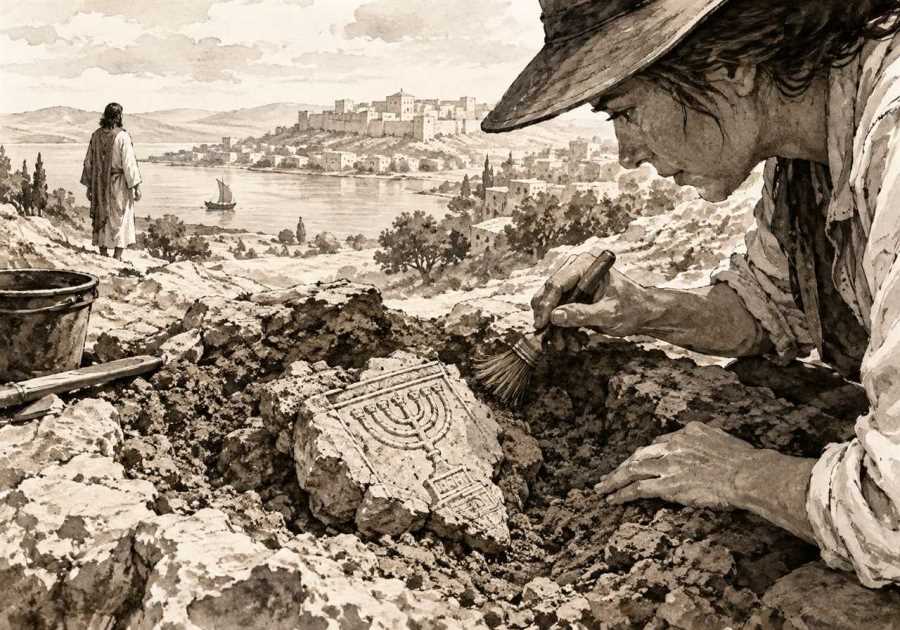
A team restoring the floors and plumbing of Jerusalem's Church of the Holy Sepulchre says it has turned up something more interesting than pipes: pollen, planted fields and an old quarry that line up with the Gospel account of where Jesus was buried.
The project's lead archaeologist, Francesca Romana Stasolla, a professor of Christian and medieval archaeology at Sapienza University of Rome, describes it as evidence of a "funerary landscape." The church, first dedicated in the fourth century and rebuilt multiple times since, has long been venerated by believers as sitting atop Jesus' temporary grave, and it still draws roughly four million Christian pilgrims a year. The restoration, reportedly costing around $11 million, gave archaeologists rare access to dig beneath the centuries-old structure.
What's actually new
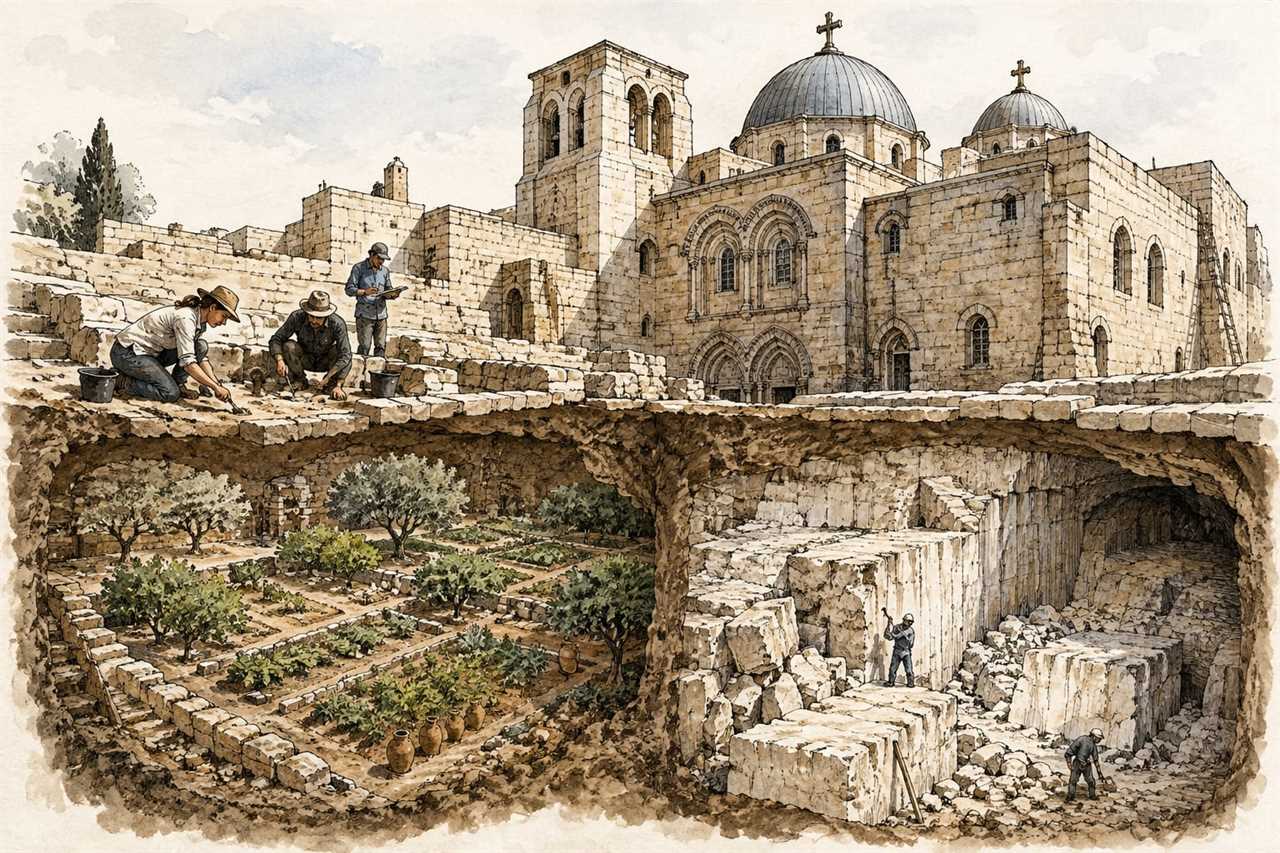
The find is botanical and geological, not a body or an inscription with his name on it. Archaeobotanical and pollen analysis on soil samples taken from beneath the church's floor turned up traces of a cultivated green space, including small plots once planted with vines and olive trees, alongside what Stasolla calls a "pastoral landscape characterized by sporadic human activity." That matches John 19:41-42, which places a garden near the crucifixion site, with a new sepulchre inside it where Jesus was laid.
Diggers also found an abandoned quarry beneath the church, sitting outside Jerusalem's ancient walls but close to the city, consistent with the Gospels placing the crucifixion outside the city gates. Cut into the quarry are several graves, which again tracks with Matthew, Mark and Luke, all of which describe Jesus' body being placed in a rock-hewn chamber.
Historically, this backs up the old story that Roman Emperor Constantine's workers uncovered the site in the fourth century after it had sat buried beneath a pagan temple, then built a shrine and the original church over it. Stasolla frames the discovery less as proof of a miracle and more as a window into how early Christians physically marked and preserved a memory. Her own words: the evidence helps show "the places and contexts in which Christian memory took shape and became firmly established," and that archaeology "attests to the enduring nature of this commemorative tradition."
That is a real and fairly careful claim. It's also considerably more modest than "Jesus' tomb has finally been found."
What we don't know yet
There is no physical evidence placing Jesus specifically in this spot. What's been found is a landscape that is consistent with the biblical description, not a confirmed burial. Stasolla herself says the excavation is happening in pieces, not as one connected dig, and that researchers are using new technology to stitch lab findings into a fuller picture over time. In other words, this is a partial puzzle, and the full picture doesn't exist yet.
There's also the Garden Tomb, another Jerusalem site some believers point to as the actual burial place, which this discovery does nothing to settle either way. And separately, a different archaeological team recently claimed to have identified the lost city of Bethsaida, where Jesus is said to have performed miracles, a claim that has its own open questions and is not the same project as this one, despite both making headlines in the same news cycle.
I've sat through enough "biblical discovery" press cycles to know the pattern: real fieldwork gets a breathless headline bolted on top of it, and the actual scientists involved are almost always more careful than the coverage. That's exactly what's happening here. Stasolla is talking about landscapes, pollen samples and commemorative tradition. Nobody on the dig is claiming they found Jesus.
So this is worth paying attention to if you care about the archaeology of early Christian Jerusalem, or you're the kind of person who finds pollen analysis under a 1,700-year-old church genuinely interesting. If you were hoping for a body, a tomb with a name on it, or anything resembling hard proof of the resurrection, there's nothing here for you yet, and there may never be.