Israeli archaeologists have uncovered a cluster of ritual immersion pools near the southern entrance to the Temple Mount, and a tour guide featured in a CBN News report thinks they might be where the 3,000 baptisms described in Acts 2 actually happened.
What's actually new
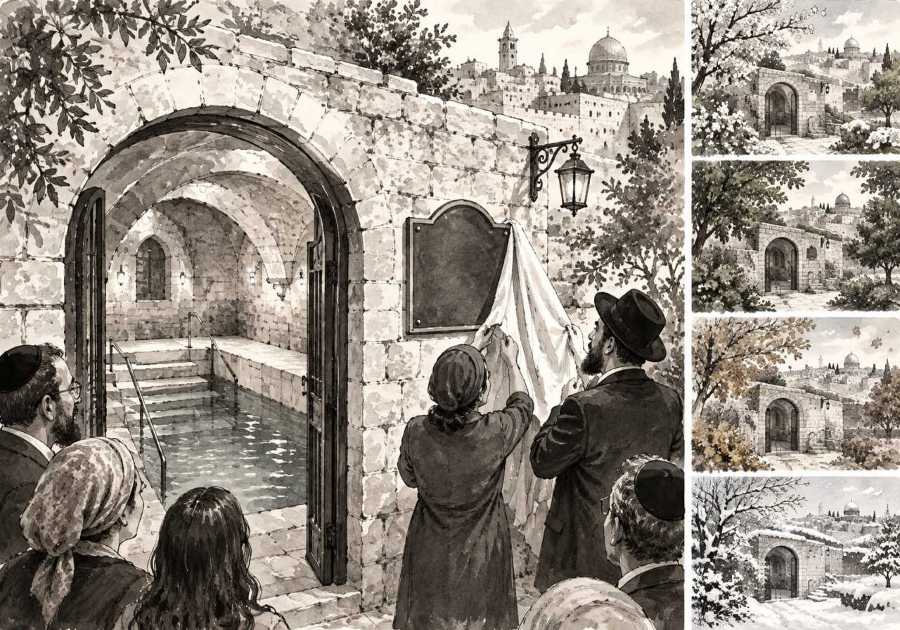
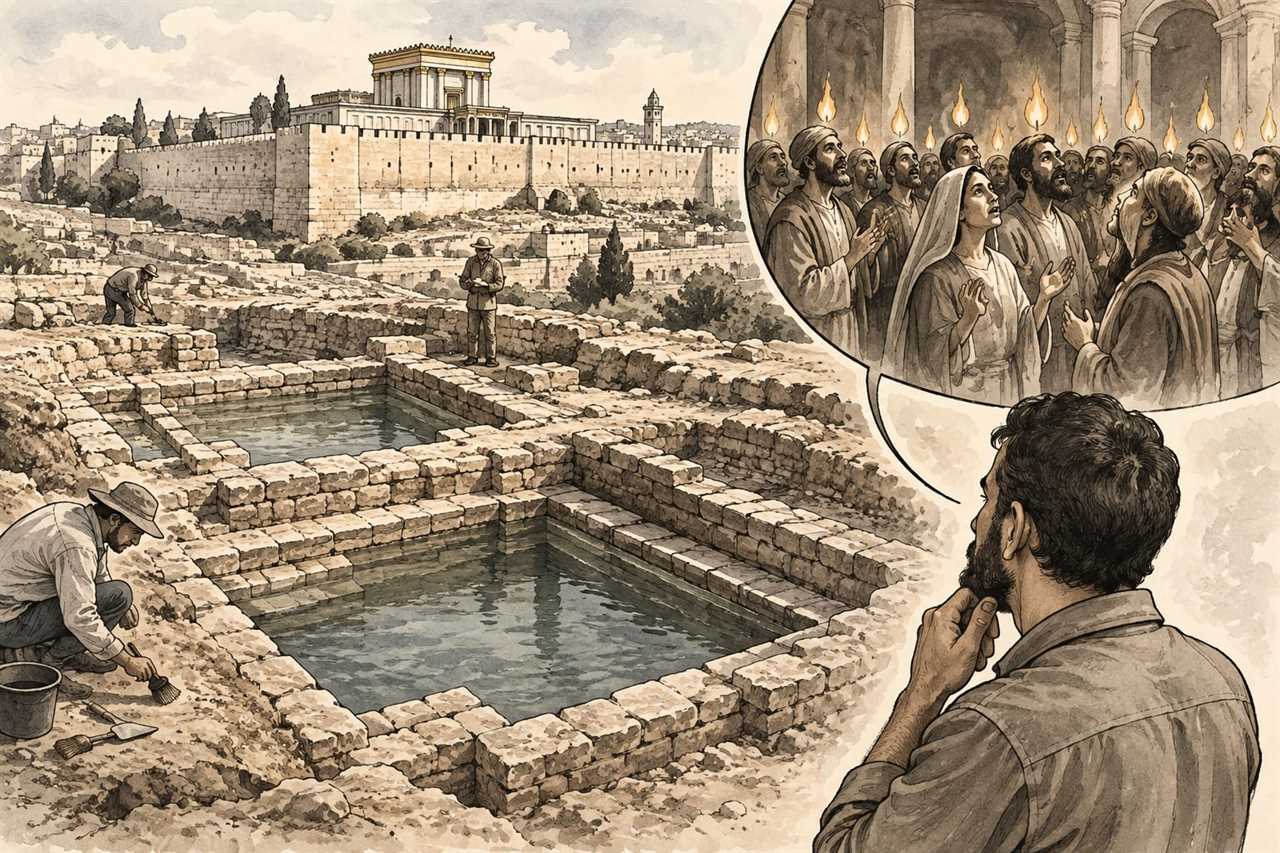
The find itself is concrete: four mikva'ot, the Jewish ritual immersion pools used for purification, arranged around a fifth, more distinctive pool near the steps leading to the Triple Gate. That gate was a working entrance for Jewish pilgrims during the Second Temple period, and according to Israeli tour guide Yoav Rotem, it's the same entrance Jesus would have used to reach the Temple Mount.
The pools sat buried under a Byzantine-era neighborhood built after Jerusalem's destruction in AD 70. Archaeologists found plastered chambers, stairs leading down into the water, and low dividers that kept people entering the pool separate from those leaving after they'd finished purifying themselves. One mikveh is in remarkably good shape, with its vaulted ceiling intact, mostly because a Byzantine house was later built directly on top of it and effectively preserved the structure as its own foundation.
Rotem ties the practice back to Leviticus and the purification rituals described there, explaining that mikva'ot let worshippers immerse in naturally gathered "living water" before entering sacred space. That part is straightforward archaeology and textual background, and it checks out on its own terms.
Where this gets more interesting, and more speculative, is the leap to Acts 2. Jewish pilgrims from across the known world had gathered in Jerusalem for Shavuot, or Pentecost, when the Holy Spirit descended on the disciples and Peter preached to the crowd. By the end of that chapter, about 3,000 people are baptized. Rotem's argument is that a site with this many immersion pools, positioned right where pilgrims would pass on their way to and from the Temple, is a plausible candidate for where that mass baptism took place. He calls the compound "probably" part of the place where it happened, and says "many archaeologists and scholars" believe the event could have unfolded there. He frames the gate itself as both the end of a physical pilgrimage and the start of what he calls a spiritual journey into the house of the Lord.
I've sat through enough of these "this site explains that Bible verse" stories to have developed a healthy skepticism reflex, and this one doesn't entirely escape it. The archaeology is real. The theological application is a guide's interpretation, offered with appropriately hedged language like "could have" and "probably." That's worth noticing, because a lot of coverage in this space drops the hedging on the way to a headline.
What we don't know yet
The CBN report, which is the source for all of this, doesn't name the archaeologists who excavated the site, give a timeframe for the dig, or specify how the pools were dated to the Second Temple period versus the later Byzantine layer above them. There's no indication of capacity, meaning nobody has said how many people these five pools could plausibly accommodate at once, which matters quite a bit if the claim is that they explain 3,000 baptisms happening in a single day.
There's also no quoted archaeologist outside of Rotem, who is described as a tour guide rather than an excavator or researcher. His claim that "many archaeologists and scholars" support the Acts 2 connection isn't attributed to anyone specific or to any published research. That doesn't make him wrong, but it does mean the connection to Acts 2 is an interpretation layered on top of a dig, not a conclusion the dig itself produced.
Who should care
If you're interested in Second Temple-period Jerusalem, pilgrimage routes, or the physical setting of early Christian history, this is a genuinely solid archaeological find worth knowing about. If you're hoping for proof that this exact spot is where Peter's converts were baptized, you'll have to settle for a guide's plausible, unverified theory dressed up as more than that.