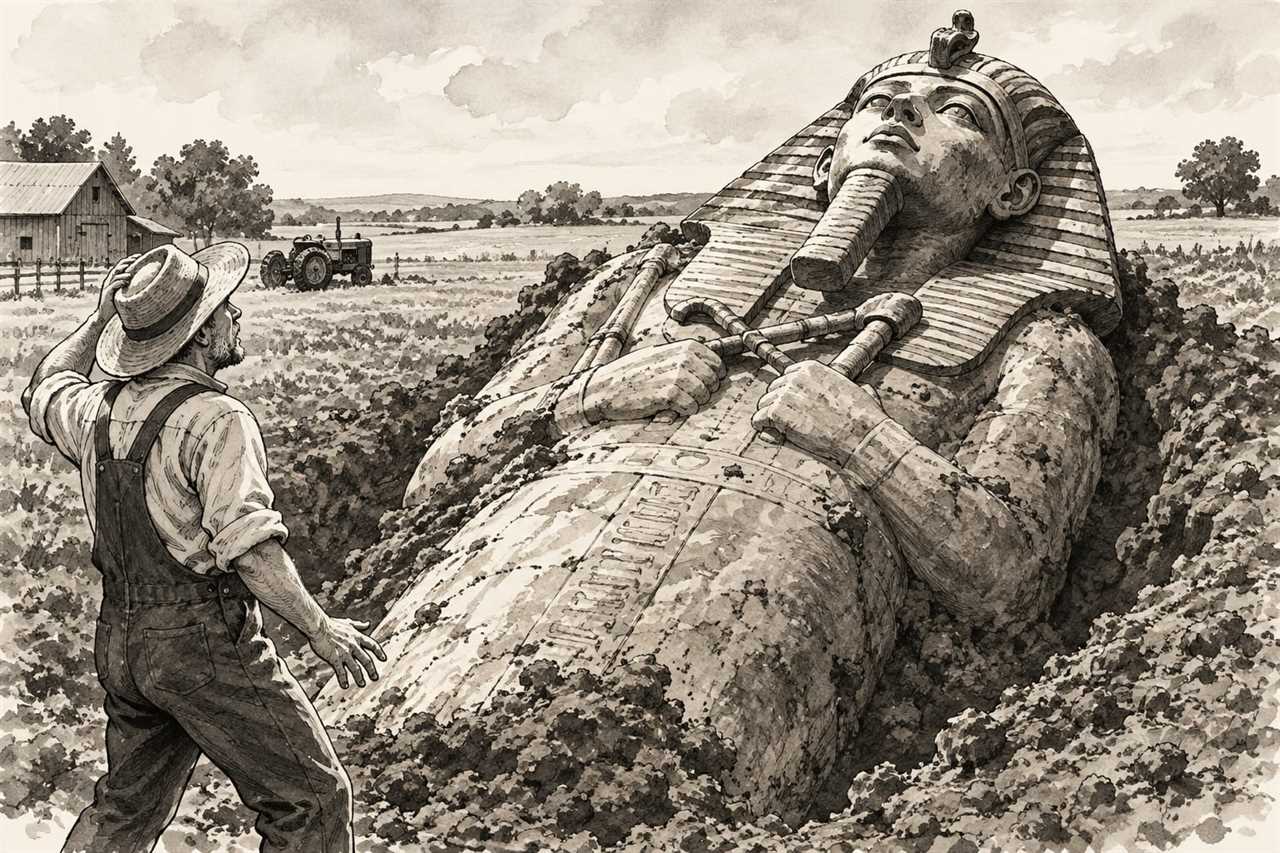
An Egyptian farmer tilling the ground in front of his own house in Behbeit El Hagar, in Gharbia province, hit a carved stone block and ended up triggering an excavation that turned up pieces of a colossal statue believed to depict Ramses II, according to the Egyptian Gazette and Heritage Daily.
What's actually new
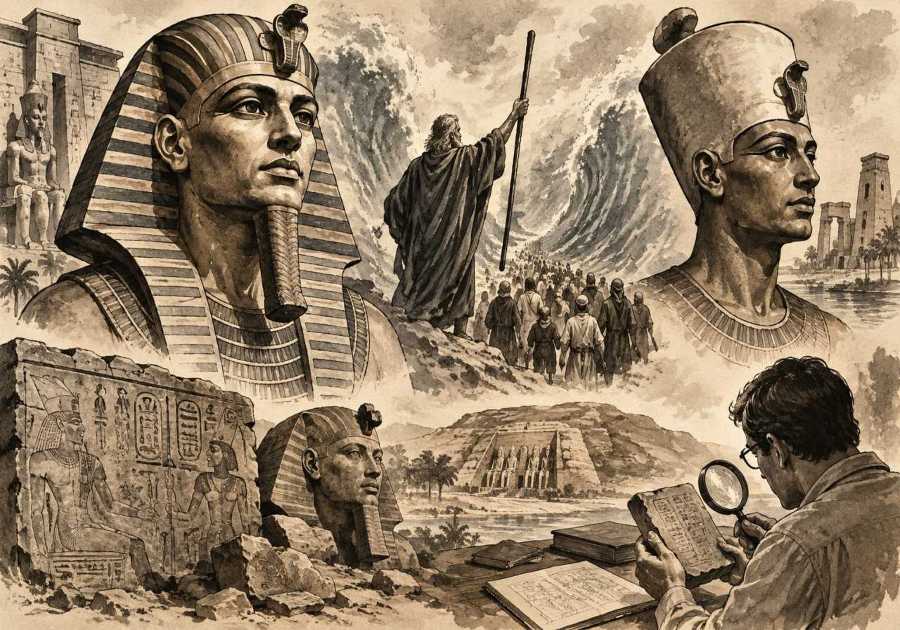
Once the farmer reported the find to local antiquities officials, a team from the Supreme Council of Antiquities moved in and started digging. What they pulled out of the ground is, by any reasonable standard, a lot of pharaoh. The headline piece is a stone head over 5 feet tall, wearing the double crown of Upper and Lower Egypt. Archaeologists used the head's size to estimate that the full statue, base included, would have stood more than 27 feet tall.
They also found a second, smaller statue, just under 8 feet, missing its legs and base but with a clearly visible face bordered by the nemes headdress, the striped cloth pharaohs wore. Between the headdress and the resemblance to the larger head, archaeologists believe this is also a likeness of Ramses II, though a second statue of the same ruler at the same site is a reasonable guess rather than a confirmed fact at this stage.
Rounding out the haul is a 4-foot block of pink granite carrying fragments of hieroglyphic inscriptions. The text includes the titles "Nesu Beti," meaning King of Upper and Lower Egypt, and "Sa Ra," meaning Son of Ra. Both are standard royal titulary, the kind of phrasing you'd expect stamped on anything commissioned by or for a pharaoh who wanted the point made clearly.
Egypt's Minister of Tourism and Antiquities, Sherif Fathy, said he hopes the find will help deepen understanding of this stretch of the Nile Delta, which functioned as a political, cultural and economic hub in ancient Egypt. Officials say they want further study to clarify the statues themselves and the architectural history of the site they came from.
I've watched enough "major discovery" press cycles in this space to have a built-in skepticism switch, and I'll say plainly that this one clears the bar. A 27-foot estimated statue height, backed by an actual measured head rather than a vague guess, is a real number from real archaeologists on site, not a press release exaggeration. That's the difference between a find and a stunt, and it's worth saying when a story earns it.
Ramses II, born in 1303 BC, is generally regarded as one of the most significant rulers of Egypt's New Kingdom, which ran from roughly 1570 to 1069 BC. He's also the pharaoh popular culture and plenty of Sunday school lessons associate with the Exodus story, the one who enslaved the Israelites and squared off against Moses. Worth noting, as the reporting does, that the Bible itself never actually names him. The link is traditional and widely assumed, not textual.
What we don't know yet
The reporting doesn't say when the excavation happened, how long it took, or whether digging is still ongoing at the site. There's no detail on what else, if anything, surrounds these pieces, no mention of a temple, tomb or larger complex that would explain why a statue this size ended up buried in front of someone's house. We also don't get any indication of how officials plan to date or authenticate the pieces beyond the stylistic and inscriptional clues already described, or what happens to the statues next, whether they'll be reassembled, displayed, or left for further excavation first.
Who should care
Anyone interested in ancient Egypt, Nile Delta archaeology or New Kingdom history has a genuine reason to pay attention here. The numbers are solid, the find is physical and verified on site, and it adds a real data point to a region officials themselves call historically significant. If you're just here for a punchy headline connecting a dusty statue to a Bible villain, you got that too, but the actual substance holds up fine without the scripture angle doing the heavy lifting.